
Last updated October 16, 2026
 Water damage drying
 Fire & smoke cleanup
 Mold remediation
 Storm response
 Sewage cleanup
 Reconstruction
Free visual inspection and a written scope of work before any mitigation begins - photos, moisture readings, and drying logs go in your claim file
The scope we write is the scope we bill. Anything new gets shown to you, in writing, before we touch it.
Get your free estimateDamage Restoration Cost Breakdown: The San Jose Homeowner’s Reference for 2026
A water damage invoice from a San Jose contractor can legitimately range from $3,000 to $40,000 for what looks like the same job on the surface. The difference is almost never fraud. It comes down to material category, affected area classification, and equipment days that most homeowners never think to question. This guide and our Damage Restoration Warning Signs: A San Jose Homeowner’s Reference Guide decode those cost drivers so you can evaluate an invoice line by line instead of just accepting or disputing the total. By the time you finish reading, you’ll know what a fair price looks like for your specific situation in San Jose, what your insurance should cover under a California HO-3 policy, and which line items actually deserve a second look.
Quick Answer
Water damage restoration in San Jose typically costs $3,000 to $8,000 for a Category 1 clean-water event affecting 200 to 400 square feet, $6,000 to $15,000 for Category 2 appliance overflows with carpet and drywall removal, and $8,000 to $25,000 or more for Category 3 sewage backups requiring antimicrobial treatment and full material replacement. The spread depends on affected square footage, equipment days, and whether the water touched structural framing. Most San Jose homeowners with a standard HO-3 policy will see $2,500 to $5,000 out of pocket after deductible, unless the damage is classified as gradual, which insurers exclude entirely.
Restoration work we handle
Table of Contents
- What Each Water Category Actually Costs in San Jose
- How Xactimate Pricing Works (And Where Invoices Get Inflated)
- The Equipment Cost Breakdown: What Daily Rates Should Look Like
- What Your California HO-3 Policy Actually Covers
- Written Scope vs. Open-Ended Estimate: Why It Matters
- San Jose Specific Cost Factors Most Guides Miss
- The Restoration Timeline and How Delays Add Cost
- Mold Remediation Cost Drivers in San Jose Homes
What Each Water Category Actually Costs in San Jose
The first number on any restoration invoice starts with the water category. The IICRC (Institute of Inspection, Cleaning and Restoration Certification) classifies water into three categories based on contamination level. That classification drives everything downstream: what gets cleaned, what gets removed, what antimicrobial treatment is required, and what the final bill looks like.
Here’s the honest breakdown for San Jose homes in 2026:
- Category 1 (Clean Water): A burst supply line under a kitchen sink, an overflowing bathtub with no soap or waste, a failed water heater in the garage. Expect $3,000 to $8,000 for a typical 200 to 400 square foot affected area. Most materials can be dried in place using professional-grade air movers and dehumidifiers. Carpet pad is usually replaced, but the carpet itself often survives.
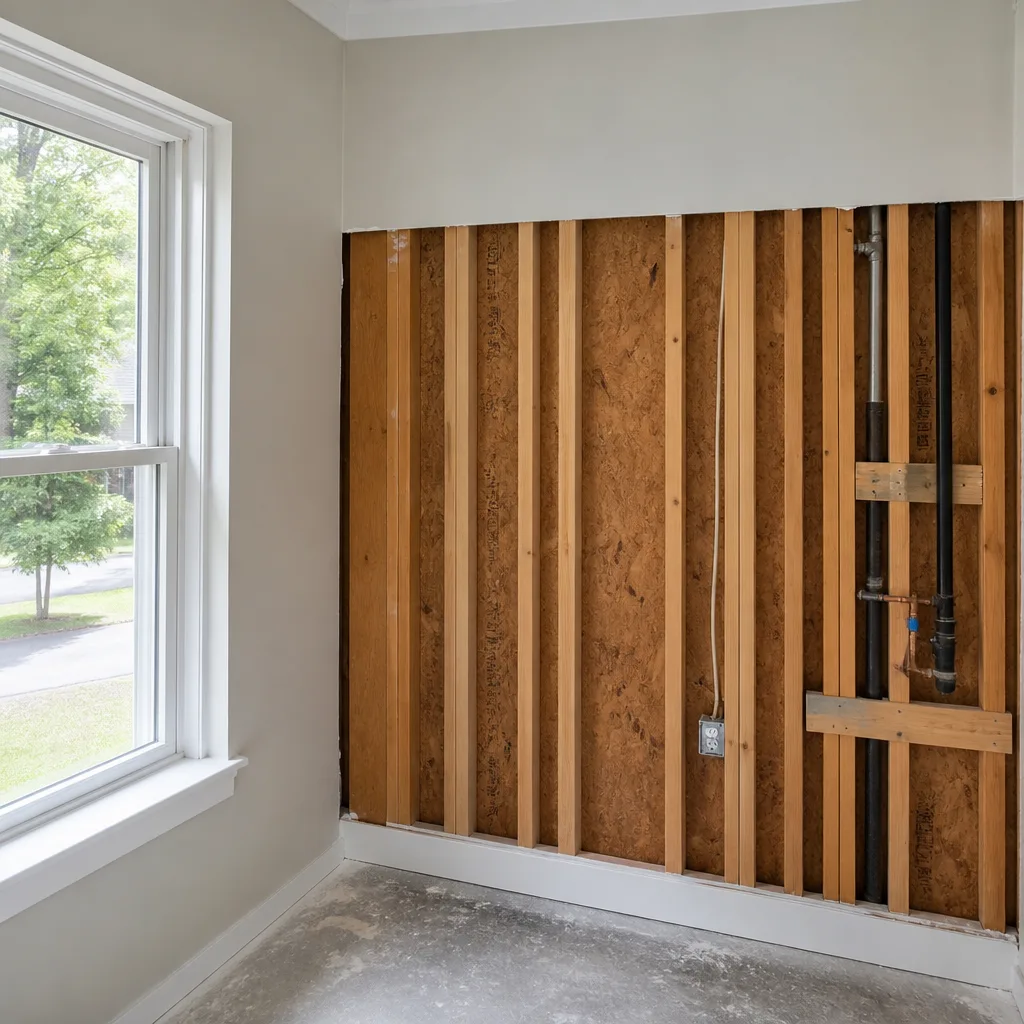
- Category 2 (Gray Water): Washing machine overflow, dishwasher discharge, AC condensate leaks, sump pump failures. The water carries biological or chemical contaminants. Expect $6,000 to $15,000. Carpet is usually removed rather than cleaned. Drywall below the water line gets cut out at 2 feet or higher. Baseboards come off. The affected area gets an antimicrobial application before drying equipment goes in.
- Category 3 (Black Water): Sewage backup from a main line clog, toilet overflow with solid waste, flood water from outside. This is the category where costs escalate fast. Expect $8,000 to $25,000 or more. All affected porous materials are removed. Hard surfaces get disinfected. In older San Jose homes with lath and plaster walls, Category 3 can mean opening walls to studs, which adds structural drying and more equipment days.
Per-square-foot benchmarks help you sanity check an estimate:
| Material | Category 1 (Clean) | Category 2 (Gray) | Category 3 (Black) |
|---|---|---|---|
| Carpet and pad | $8 to $14 per sq ft | $12 to $18 per sq ft (remove and replace) | $15 to $22 per sq ft (full removal, disposal, replacement) |
| Drywall (cut, remove, replace) | $10 to $16 per sq ft when wet | $12 to $18 per sq ft (2 ft flood cut) | $14 to $20 per sq ft (4 ft flood cut or full wall) |
| Hardwood flooring | $6 to $10 per sq ft (dry in place) | $10 to $16 per sq ft (sand and refinish) | $14 to $22 per sq ft (remove and replace) |
| Subfloor and structural framing | Rarely needed | $8 to $12 per sq ft when affected | $12 to $18 per sq ft (full replacement) |
These numbers are San Jose specific. The local market rate for licensed restoration contractors in Santa Clara County runs slightly above the national average because of higher labor costs, permit requirements for certain structural repairs, and the age of housing stock. If your estimate falls well below these ranges, ask what’s being skipped. If it’s far above, ask for the line item detail.
How Xactimate Pricing Works (And Where Invoices Get Inflated)
Xactimate is the software that nearly every restoration company and insurance adjuster uses to price water damage claims. It maintains a database of line item codes for every conceivable repair task, with pricing adjusted by zip code. That’s the system behind the invoice you’ll receive. Understanding how it works gives you leverage when reviewing a bill.
The three legitimate cost components on any Xactimate estimate:
- Material line items: The actual cost of drywall, baseboard, carpet, pad, paint, and trim. Xactimate prices these at retail replacement cost for your San Jose zip code.
- Labor and labor burden: The hourly rate for technicians, plus taxes, workers’ compensation, and benefits. In San Jose, expect labor rates of $55 to $90 per hour per technician, depending on the task. Labor burden adds 20 to 35 percent on top of direct labor.
- Overhead and profit: Typically 10 percent overhead and 10 percent profit on top of subtotal. This is a legitimate charge. Restoration companies carry equipment, training, insurance, and 24/7 staffing costs that don’t show up as line items.
The line items most commonly inflated in disputed claims:
- Equipment rental days: The number of days dehumidifiers and air movers are billed for should match the drying log. If drying took 4 days and the invoice shows 7 days of equipment, that’s a discrepancy.
- After-hours labor multipliers: Emergency calls at 2 a.m. do cost more. But if the work happened during business hours and the invoice still has a 1.5x multiplier, question it.
- Supervision or project management hours: One project manager overseeing a 3-day job should bill maybe 6 to 10 hours total. If you see 20 hours of supervision on a small Category 1 dryout, that’s worth pushing back on.
- Cleaning line items duplicated: Sometimes you’ll see “HEPA vacuuming” and “detailed cleaning” listed separately for the same room. Ask why both are needed.
- Debris removal at high volume rates: Removing wet drywall and carpet from a 300 square foot room should be one or two dump runs. Invoices billing 10 cubic yards of debris for that scenario deserve scrutiny.
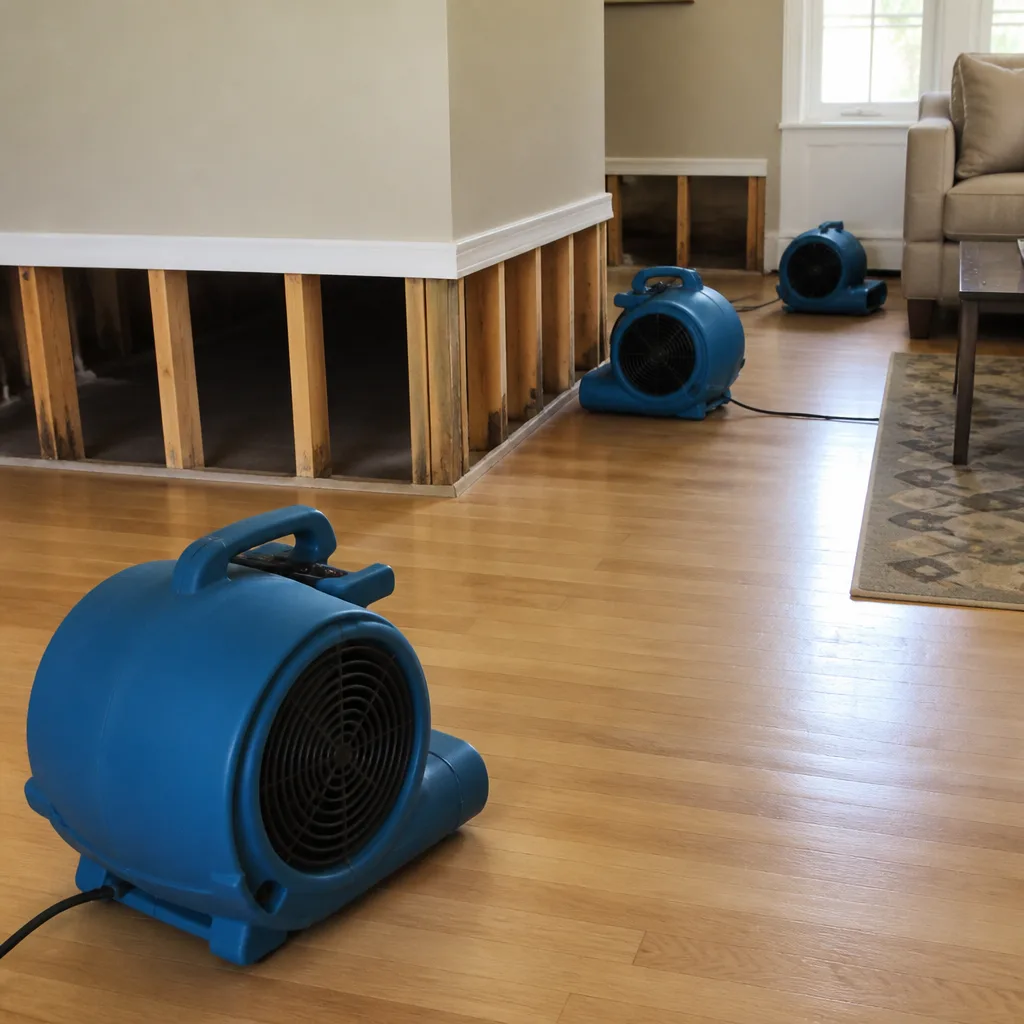
- Industrial dehumidifier (Dri-Eaz, Phoenix): $65 to $110 per day per unit. A typical affected area of 300 square feet with saturated drywall needs 1 to 2 units.
- Air mover (XPOWER, B-Air): $30 to $50 per day per unit. The standard is one air mover for every 40 to 60 square feet of affected floor space. A 300 square foot damaged area reasonably requires 5 to 8 air movers.
- Negative air machine (for mold or sewage work): $75 to $130 per day per unit. These are used only for Category 3 water or mold remediation jobs, never for clean water dryouts.
- Injectidry system (for hardwood floor drying): $150 to $250 per day for the system. This is a specialized piece of equipment that pulls moisture from beneath hardwood floors without removing them. It gets specified when floors can be saved.
- Ask for the drying log. IICRC protocol requires daily moisture readings with a record of ambient humidity, material moisture content, and equipment running.
- Divide the affected square footage by 50. That’s roughly the number of air movers you should expect to see.
- Divide the affected cubic volume by 3,000. That gives you the recommended dehumidifier capacity in pints. A 300 square foot room with 8 foot ceilings has 2,400 cubic feet. A dehumidifier rated for 70 to 100 pints per day handles that comfortably.
- Ask what changed day to day. Equipment should be removed as areas meet drying goals. If the same number of units stayed running for the full job with no reduction, that’s a red flag.
- Sudden and accidental discharge: A supply line that bursts, a water heater that fails catastrophically, an appliance hose that pops. The key word is sudden. If water was spraying for minutes rather than dripping for weeks, you have a coverage argument.
- Resulting damage from a covered peril: The water damage itself, plus the cost to access and repair the failed component’s immediate area. Drywall removal, carpet replacement, drying, and antimicrobial treatment are covered when the cause is covered.
- Mold remediation: Only when it results from a covered water event. Most policies cap mold coverage at $5,000 to $10,000. Read your policy to confirm your cap.
- Gradual damage: A slow leak behind a shower valve that’s been seeping for six months. The insurer will call this a maintenance failure. The water damage and resulting mold remediation fall to you. This is the exclusion most homeowners misread. The policy says it covers “sudden and accidental” discharge. It does not cover “continuous or repeated seepage or leakage over a period of weeks, months, or years.”
- Flood damage: Not covered by homeowner’s insurance at all. Requires separate FEMA flood insurance. This matters in San Jose neighborhoods near the Guadalupe River or Coyote Creek.
- Sewer backup: Often excluded unless you purchased a sewer backup endorsement. Check your policy. Many San Jose homeowners discover this exclusion during a rainy season main line backup.
- Affected area: Kitchen, dining area, hallway. Approximately 280 square feet.
- Category: Category 2 gray water from dishwasher supply line failure.
- Removal: Carpet and pad in affected area. Baseboards in affected area. Drywall flood cut at 2 feet in affected areas where moisture readings exceed 25 percent.
- Drying: Industry standard: 4 days of equipment rental. 5 air movers, 1 dehumidifier. Daily monitoring with written drying log.
- Antimicrobial treatment: Application to all affected surfaces after removal, before drying equipment placement.
- Final cost: $8,750. This is the number you pay. Not an estimate. A written commitment.
- No surprise line items on the final invoice
- A document you can hand to your insurance adjuster that maps exactly to the coverage determination
- Clarity on what’s included and what’s excluded (such as reconstruction after drying, which is typically separate)
- Leverage to dispute any additional charge that falls outside the written scope
- Day 1: Emergency response. Water extraction, removal of unsalvageable materials, antimicrobial application, equipment placement. Expect a technician on site within hours of your call. The first day is the most expensive day of the job, typically $2,000 to $4,000 including labor and equipment setup.
- Days 2 to 4: Drying and monitoring. Equipment runs continuously. A technician visits daily to take moisture readings and adjust equipment placement. Daily cost drops to equipment rental plus a short monitoring visit, typically $200 to $400 per day.
- Day 4 or 5: Equipment removal. Once moisture readings confirm the structure is dry, equipment gets pulled out. Drying is complete. Most Category 2 jobs wrap the drying phase in 3 to 5 days.
- Days 5 to 14: Repairs and reconstruction. Drywall replacement, painting, baseboard installation, carpet installation. This phase gets priced separately from the emergency restoration work and typically takes 1 to 2 weeks.
- Small isolated mold (under 10 square feet): $800 to $2,500. Typically one room, one affected surface. Minimal containment. Can often be handled same day.
- Moderate mold (10 to 50 square feet): $2,500 to $7,000. Containment required. Typically involves opening a wall cavity, removing affected drywall, treating the framing, and replacing the drywall.
- Large mold (50+ square feet or multiple rooms): $7,000 to $20,000. Full containment with negative air pressure, HEPA filtration, substantial material removal, and reconstruction.
- Containment setup: Negative air machines, plastic sheeting barriers, and HEPA filters add $500 to $1,500 in setup costs before any remediation work starts. This is a necessary safety measure, not an upsell. The IICRC protocol for mold requires containment.
- Post-remediation verification: A clearance test by an independent mold assessor costs $300 to $600. The remediation company cannot perform this test themselves without a conflict of interest. Insist on third-party verification.
- Source correction: If the mold was caused by a plumbing leak, a roof leak, or a humidity problem, the source must be fixed or the mold returns. Source correction can be a $300 plumbing repair or a $15,000 roof replacement, depending on what caused the moisture.
You don’t need to become a Xactimate expert. You need to know that every line item has a code, every code has a description, and you have the right to ask what each one means. A reputable restoration company will walk you through the invoice without getting defensive. That’s a baseline expectation in this industry, not a premium service.
The Equipment Cost Breakdown: What Daily Rates Should Look Like
Equipment costs are the black box of restoration pricing. Most homeowners never question them because they don’t know what’s reasonable. Here’s what the daily rental rates look like on a 2026 San Jose restoration invoice:
How to check whether the equipment count on your invoice matches the affected square footage:
In our experience working San Jose homes, the most common equipment-related dispute is not fraud. It’s sloppy record keeping. The drying log gets filled in from memory at the end of the week, and the invoice reflects whatever the technician remembers. A company that sends you before and after photos by text, plus a daily drying log, removes that entire category of doubt. When we restore a home, the homeowner sees photo documentation of equipment placement on day one, and the moisture readings that justify keeping or removing units each subsequent day.
What Your California HO-3 Policy Actually Covers
The single biggest surprise for San Jose homeowners is how much of their water damage bill falls outside insurance coverage. A standard California HO-3 policy covers water damage only under specific conditions. The policy language matters more than the restore company’s invoice, because the insurer’s coverage determination controls how much you pay out of pocket.
What HO-3 typically covers:
What HO-3 typically excludes or limits:
When you file a claim, the insurance adjuster will use Xactimate too. Their number and the restoration company’s number should be close. If they’re far apart, the adjuster will negotiate specific line items. Having a restoration company that documents everything with photo evidence and provides a written scope of work before starting gives you a stronger position in that negotiation. When we work with a San Jose homeowner on an insurance claim, we coordinate directly with the adjuster, send photographic documentation of every affected area, and invoice line by line so the adjuster can approve items without site visits dragging the process out.
Written Scope vs. Open-Ended Estimate: Why It Matters
Most restoration companies in San Jose give you an estimate, not a scope of work. An estimate is a best guess. A scope of work is a binding document that lists exactly what will be done, what materials will be used, how many equipment days are included, and what the total cost will be. The difference shows up on the final invoice.
An open-ended estimate looks like this: “Water damage restoration: $6,500 estimated. Final billing based on actual work completed. Additional charges may apply.” That’s legal. It’s also how a $6,500 estimate becomes an $11,000 invoice. The homeowner signed an authorization that allowed the company to proceed based on time and materials.
A written scope of work looks like this:
What a binding scope gets you:
Every job we do at Wendell Restoration San Jose home starts with a written scope of work before any water extraction or drying begins. The price goes in writing first. That’s our standard, not an upgrade. It’s the only way to have a real conversation about cost when the emergency part of the job is over and the invoice arrives.
San Jose Specific Cost Factors Most Guides Miss
National restoration cost guides won’t tell you about the factors that move prices in San Jose specifically. We’ve worked enough homes here to name them.
Age of housing stock. A meaningful share of San Jose single family homes were built between 1950 and 1975. That means lath and plaster walls, not drywall. Plaster absorbs water differently, takes longer to dry, and often requires different removal techniques. The cost per square foot to remove and replace plaster runs higher than drywall, and the drying time is longer, which adds equipment days.
Crawl space construction. Many San Jose homes sit on raised foundations with crawl spaces. When water gets under the house, the crawl space needs drying and sometimes encapsulation. That’s an entirely separate line item from the interior restoration. In neighborhoods like Willow Glen and Rose Garden, where raised foundations are the norm, crawl space drying commonly adds $1,500 to $4,000 to a water damage bill.
Permit requirements. Structural repairs in San Jose require permits from the city’s Building Division. When water damage extends to subfloor replacement, wall framing, or ceiling joists, the restoration company must pull permits. Damage Restoration Permits, Codes & Inspections in CA: What You Need to Know explains why permit fees run $200 to $1,000 depending on the scope, and how the permit process can add days to the timeline. A restoration company that skips permits on structural work creates a liability for you when you sell the house.
Rainy season demand. San Jose gets most of its rain between November and March. That’s when roof leaks, window failures, and foundation seepage spike. Restoration companies run at capacity, and emergency after-hours rates apply more often. The same job done in August might cost 10 to 15 percent less simply because it’s not competing with 40 other flooded homes.
HOA considerations. If you live in a condo or townhome in San Jose, your HOA may own a portion of the affected structure. The restoration cost gets split between your unit’s coverage and the HOA’s master policy. This complicates the invoice and the timeline. You want a restoration company that has dealt with HOA claims in San Jose before, because the coordination alone can add weeks.
The Restoration Timeline and How Delays Add Cost
Time is a cost factor that most homeowners overlook. The longer a water damage job drags on, the more you pay in three hidden ways: additional equipment days, secondary damage like mold growth, and lost use of your home.
The typical timeline for a Category 2 water event in San Jose:
When the timeline extends, each extra day of equipment rental is $100 to $300. If monitoring visits are skipped and a wet spot goes unnoticed, you get a secondary mold problem that adds a second remediation job on top of the first. The cheapest restoration job is the one that gets handled promptly and monitored correctly from the start, as covered in our DIY vs Professional Damage Restoration: The San Jose Homeowner’s Decision Guide.
Our Water Damage Restoration in San Jose service runs on this timeline with daily photo updates sent by text. You see the moisture readings dropping day by day. When the numbers say dry, equipment comes out. No games with extra rental days.
Mold Remediation Cost Drivers in San Jose Homes
Mold remediation deserves its own section because the pricing logic is different from water damage restoration. Mold jobs are priced by containment complexity, not just square footage.
The cost ranges for San Jose mold remediation in 2026:
What drives mold remediation cost in San Jose specifically:
Our Mold Remediation in San Jose approach follows the same written scope protocol as our water damage work. You get a price before any demolition starts. You get photo documentation of the affected areas before treatment, and after photos when the job is done. The number on your screen is the number you pay.
Common Mistakes to Avoid
- Accepting an estimate without a written scope. An estimate is a guess. A scope of work is a commitment. Get the scope in writing before any work starts, and hold the company to it when the invoice arrives.
- Waiting to file an insurance claim. California law requires you to report damage promptly. Waiting weeks to file a water damage claim gives the insurer a reason to argue that secondary damage was preventable and therefore not covered.
- Using a regular handyman for water extraction. Wet drywall and carpet need professional drying equipment. A shop vac and a box fan do not dry a wall cavity. The handyman approach costs less on day one and more on day thirty when the mold appears.
- Ignoring the drying log. The drying log is the evidence that the job was done correctly. No drying log means no proof that moisture readings returned to normal. If the company won’t provide it, find a different company.
- Paying the full invoice before insurance settles. You’ll get your money back eventually if coverage is confirmed, but the restoration company should be willing to bill the insurer directly for covered work. Ask about direct insurance billing before you sign anything.
- Assuming mold removal and mold remediation are the same thing. Removal means wiping the surface. Remediation means fixing the moisture source, containing the affected area, removing contaminated materials, and verifying the air is clear. The prices differ by a factor of ten for good reason.
- Choosing the lowest bid on a sewage backup. Category 3 water requires specific protocols. A contractor who quotes $1,500 for a sewage cleanup is not doing the same job as the contractor who quotes $8,000. The low bid is doing removal and deodorizing. The higher bid is doing full remediation. The difference shows up in your family’s health.
See the difference
 Before
 After
After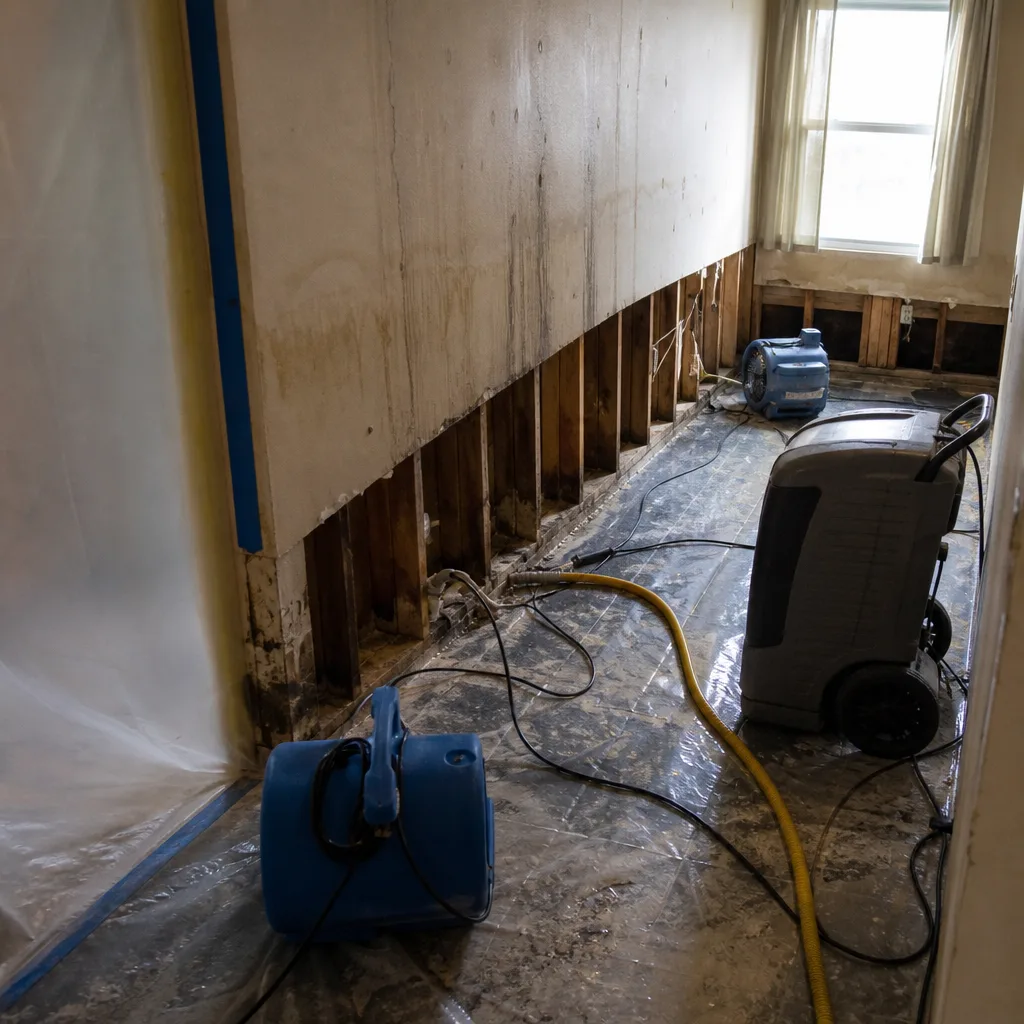 Before
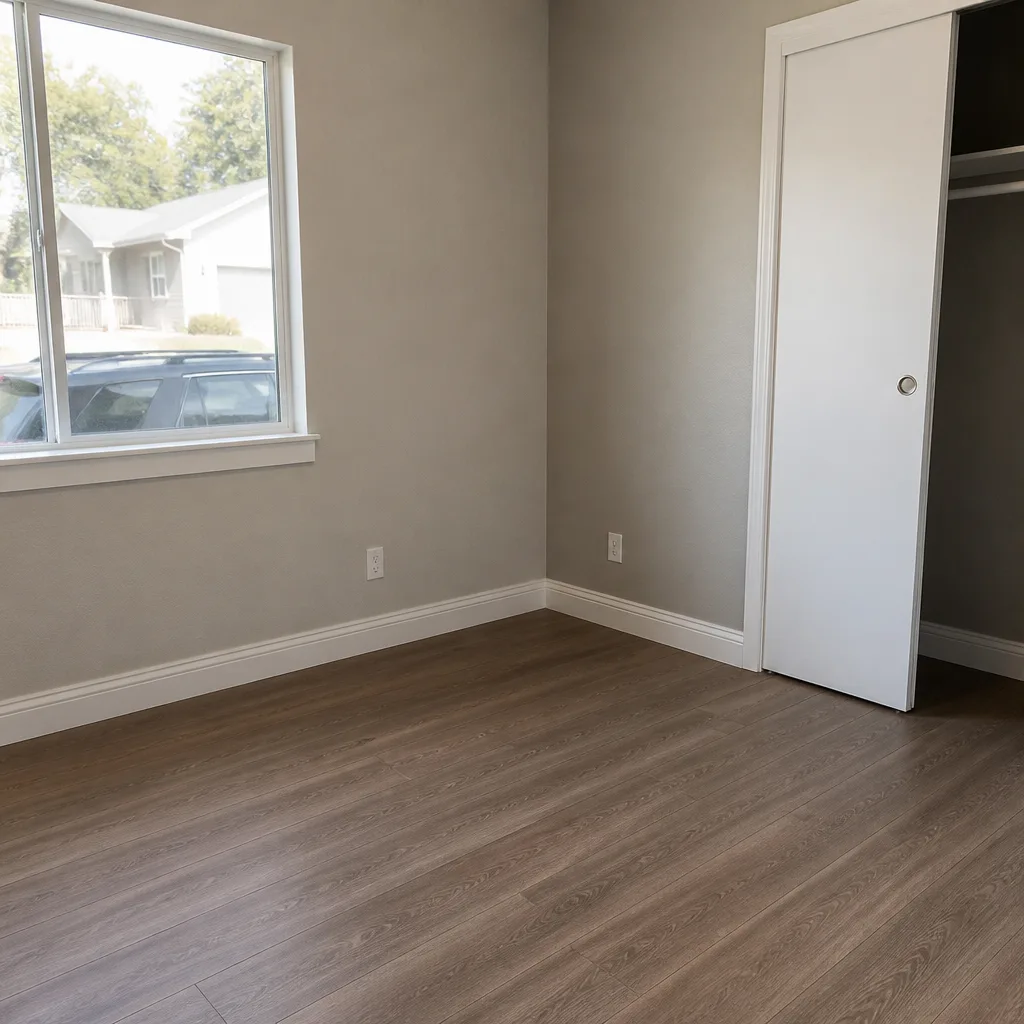 After
After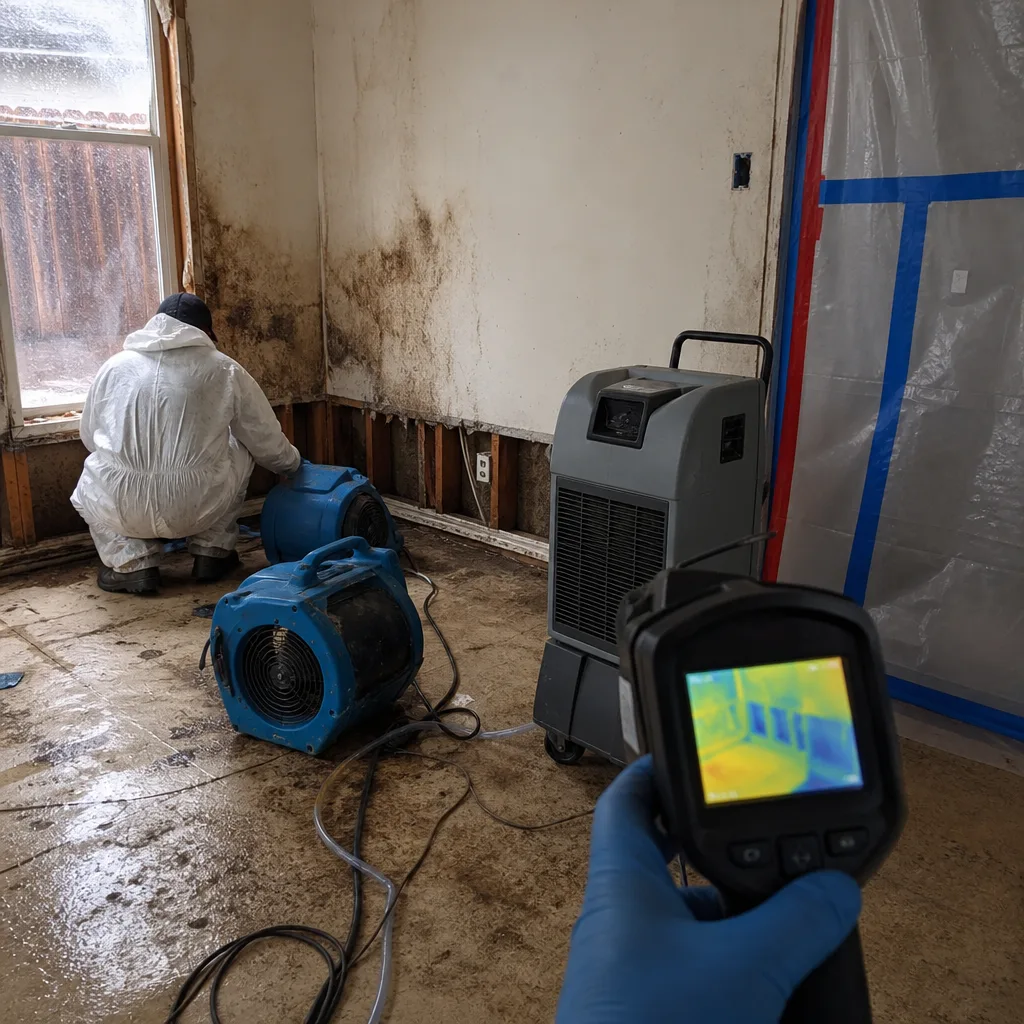 Before
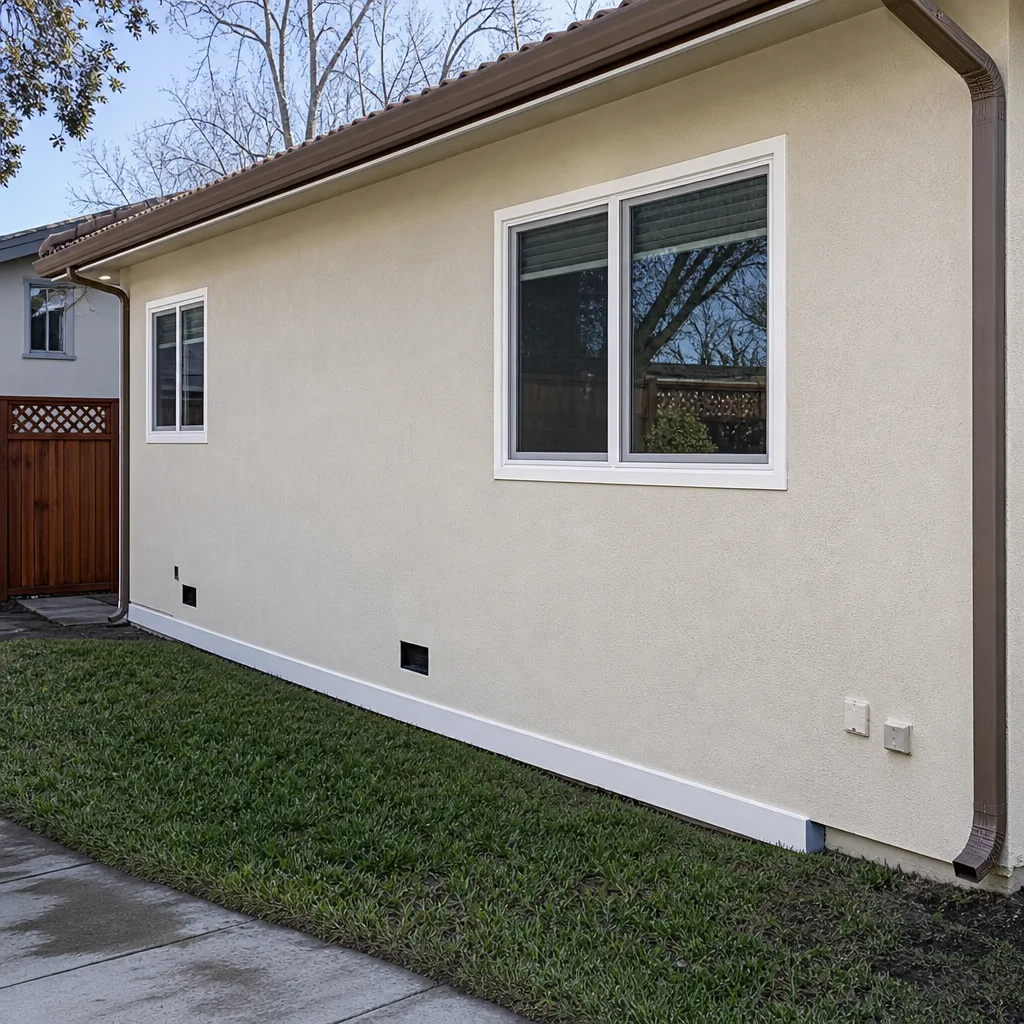 After
AfterWhen to Call a Professional
You should call a restoration professional when the affected area exceeds what you can dry completely within 48 hours, when the water is Category 2 or Category 3, when water has penetrated drywall or flooring, or when you see visible mold growth of any size. You should also call immediately if the water originated from a sewage source, if electrical outlets or wiring were submerged, or if you smell a musty odor that suggests hidden moisture. Attempting to handle these situations yourself extends the damage and increases the final restoration cost. Water Damage Repair in San Jose is available for emergency response with a live person answering every call 24/7. Call (669) 200-0453 for a free estimate that includes a written scope of work before anything gets touched.
Frequently Asked Questions
Water damage restoration in San Jose typically costs between $3,000 and $15,000 depending on the water category, affected square footage, and required equipment days. A Category 1 clean water event in 200 to 400 square feet runs $3,000 to $8,000. A Category 3 sewage backup in the same area runs $8,000 to $25,000. Call (669) 200-0453 for a free estimate with a written scope before work starts.
Yes, if the damage is sudden and accidental, such as a burst pipe or failed water heater. No, if the damage is gradual, such as a slow leak that’s been running for weeks. California HO-3 policies cover sudden discharge and the resulting damage, but exclude continuous seepage. Sewer backups often require a separate endorsement, which many San Jose homeowners don’t have.
The same day you call, in most cases. Emergency restoration companies staff 24/7 dispatch teams specifically because water damage doesn’t keep business hours. Wendell Restoration San Jose answers every call with a live person and provides a trackable technician arrival time, not a vague four hour window.
If visible mold covers more than 10 square feet, or if the mold source involves a moisture problem inside a wall cavity, you need full remediation with containment, not surface cleaning. Surface cleaning leaves spores behind and the mold returns. Remediation eliminates the moisture source, removes contaminated materials, and verifies the air is clear with third-party testing.
You can deal with the adjuster yourself, but a restoration company that bills insurance directly will save you weeks of back and forth. We coordinate with adjusters on San Jose claims, provide photo documentation of all affected areas, and invoice line by line in Xactimate format so the adjuster can approve items without repeated site visits.
Expect $65 to $110 per day for an industrial dehumidifier, $30 to $50 per day per air mover, and $75 to $130 per day for a negative air machine. A 300 square foot affected area typically uses 5 to 8 air movers and 1 to 2 dehumidifiers, which comes to roughly $250 to $600 per day in equipment costs. The drying log should show daily moisture readings that justify each day of equipment.
The Bottom Line
San Jose homeowners in 2026 can expect to pay $3,000 to $25,000 for water damage restoration, with the final number driven by the water category, the affected square footage, the equipment days required, and whether the insurance company accepts the claim as sudden rather than gradual. The best protection against inflated invoices is not haggling after the fact. It’s demanding a written scope of work before the job starts, requiring photo documentation throughout, and choosing a restoration company that will explain every line item without hesitation. That transparency exists in San Jose. For more guides & resources, explore our blog.
Written by Blake Sorensen, Owner at Wendell Restoration San Jose, serving San Jose since 2006.