
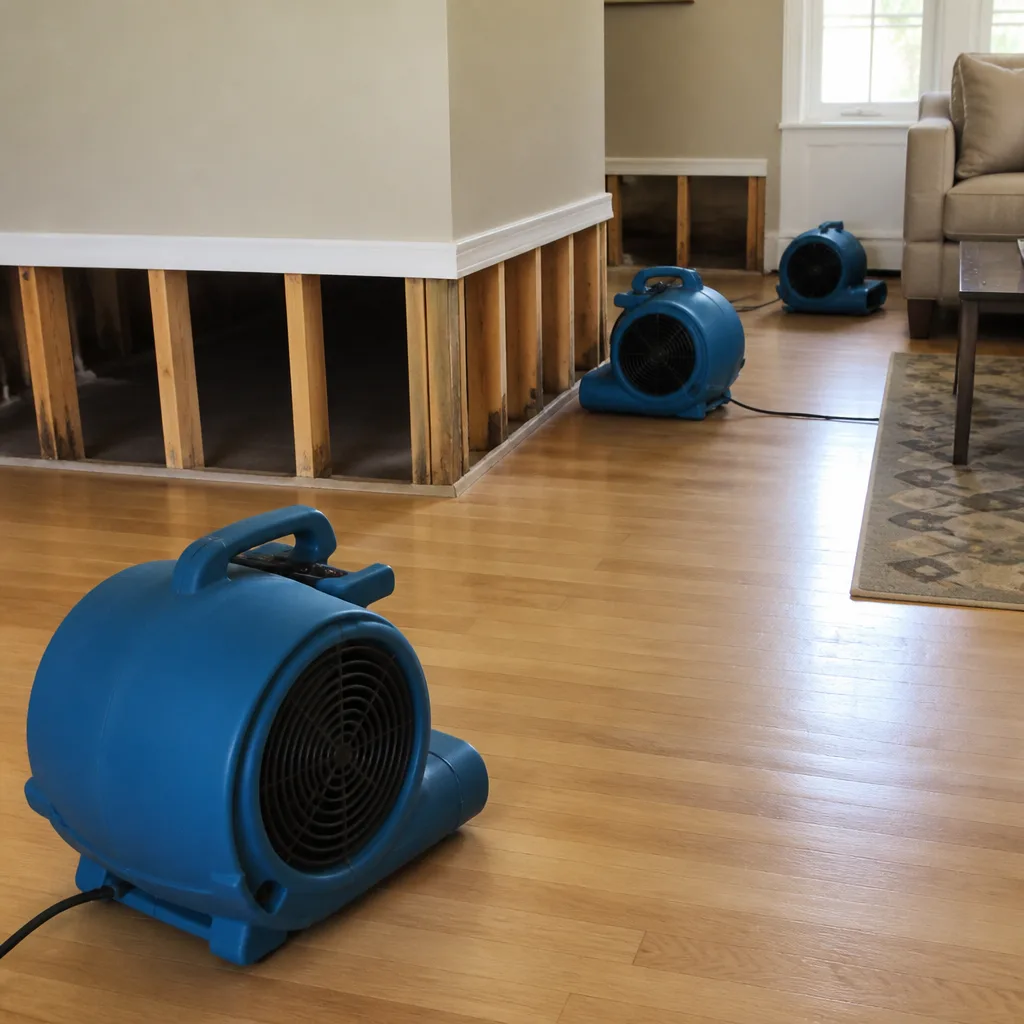
 Water damage drying
 Fire & smoke cleanup
 Mold remediation
 Storm response
 Sewage cleanup
 Reconstruction
Free visual inspection and a written scope of work before any mitigation begins - photos, moisture readings, and drying logs go in your claim file
The scope we write is the scope we bill. Anything new gets shown to you, in writing, before we touch it.
Get your free estimateRestoration work we handle
See the difference
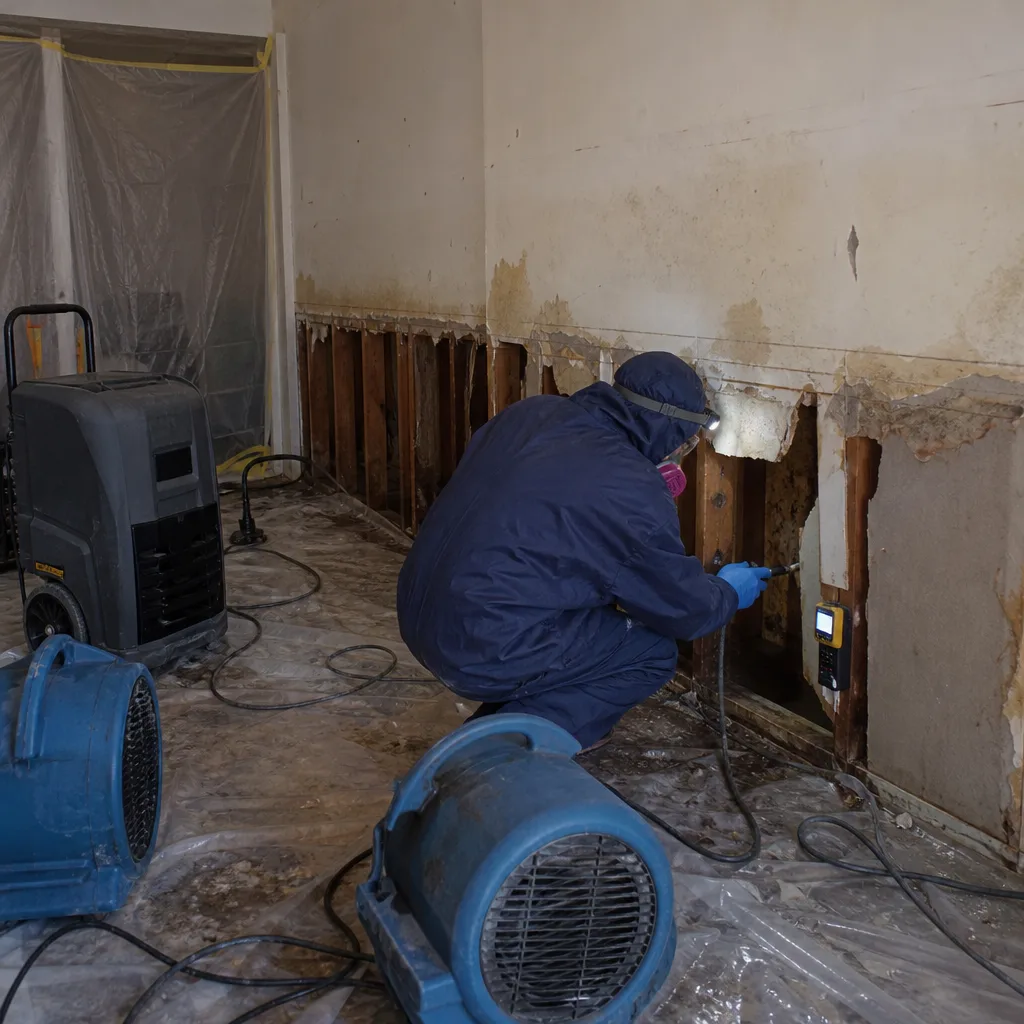 Before
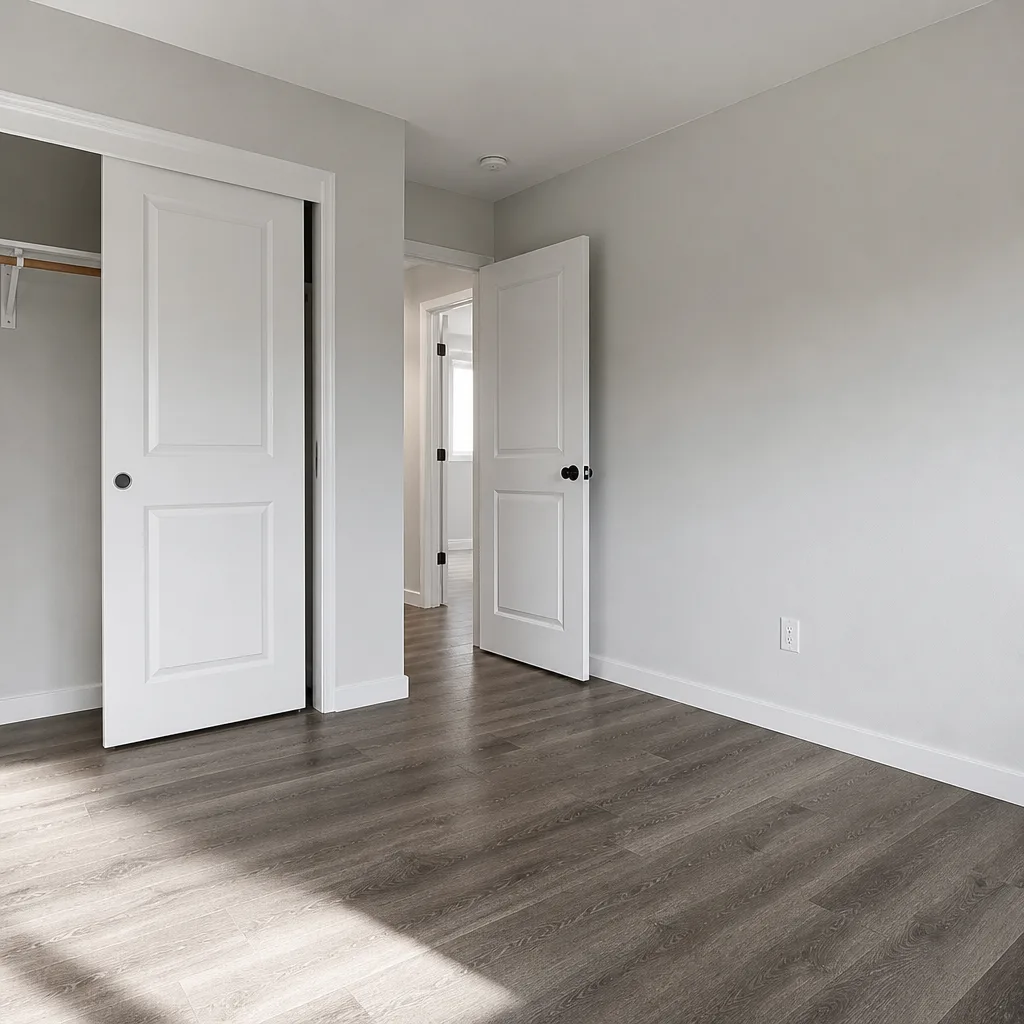 After
After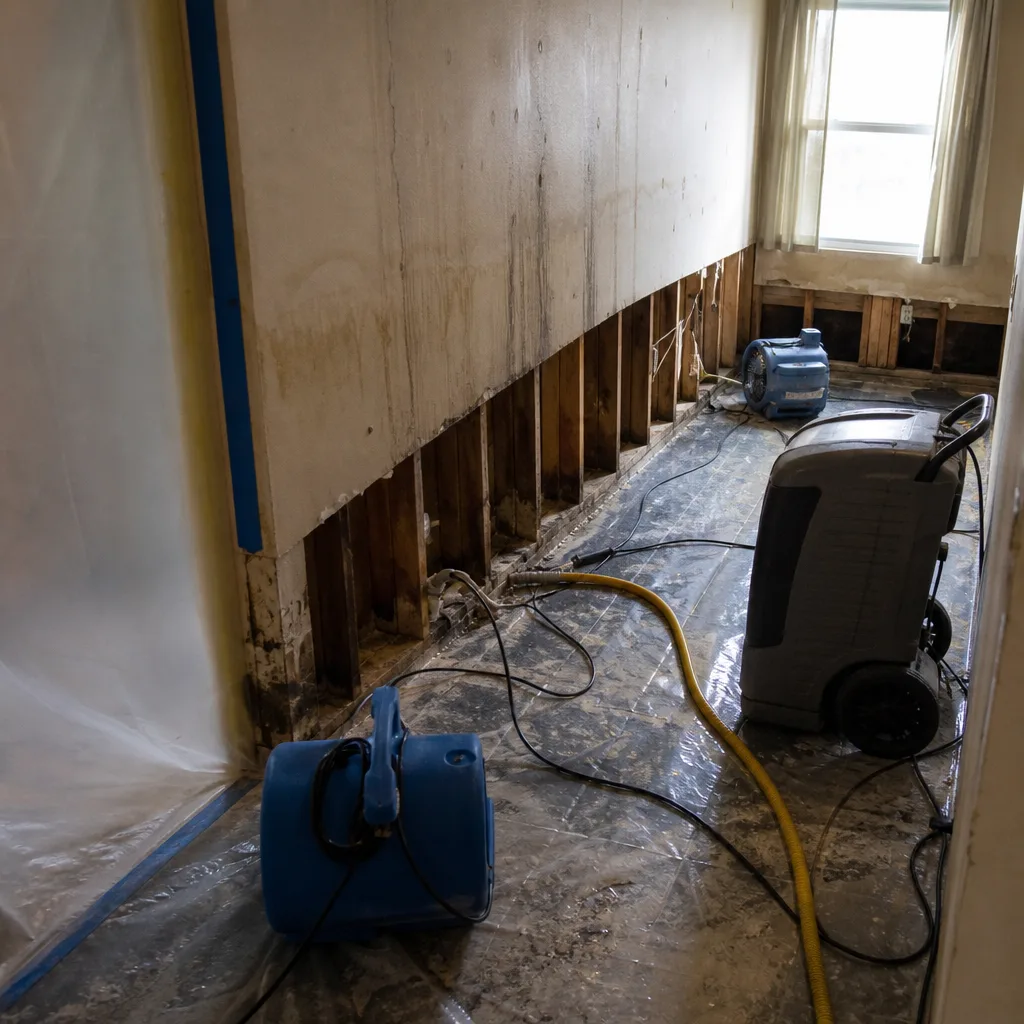 Before
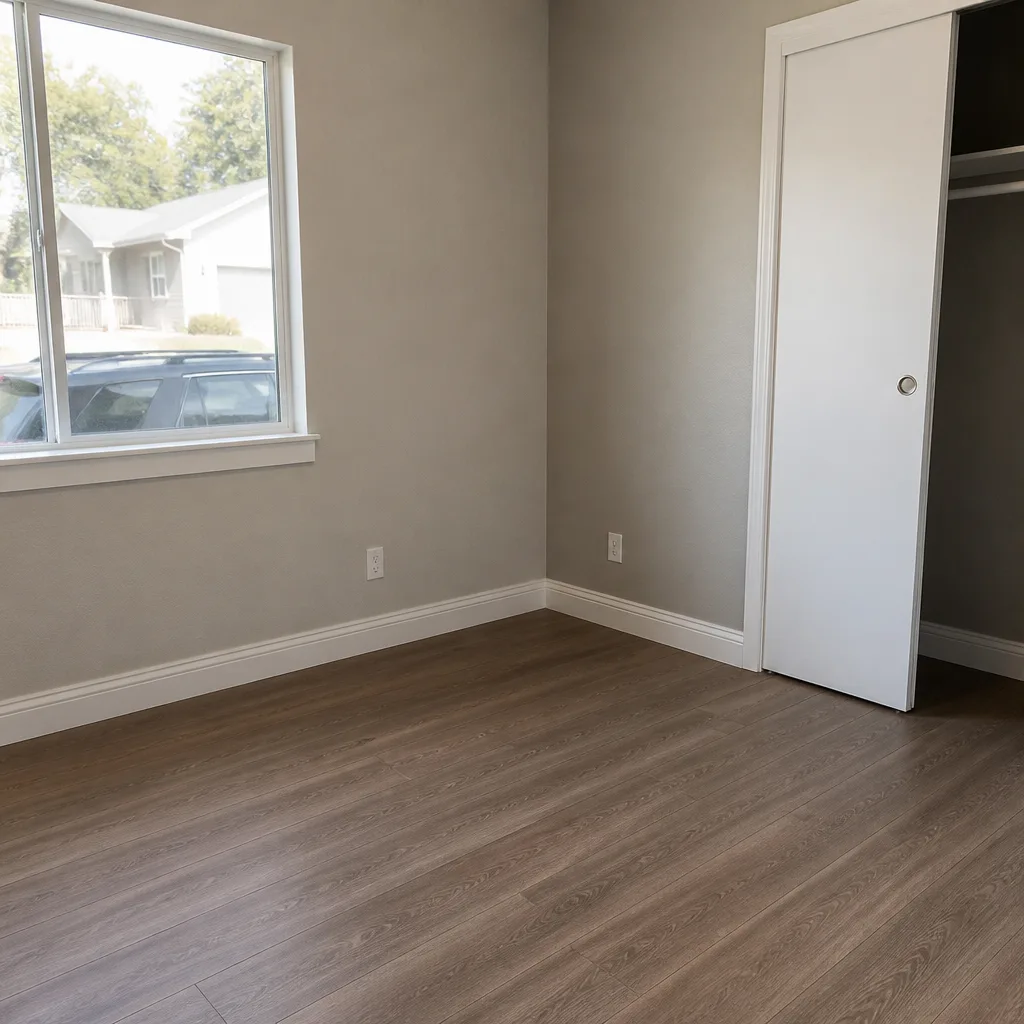 After
After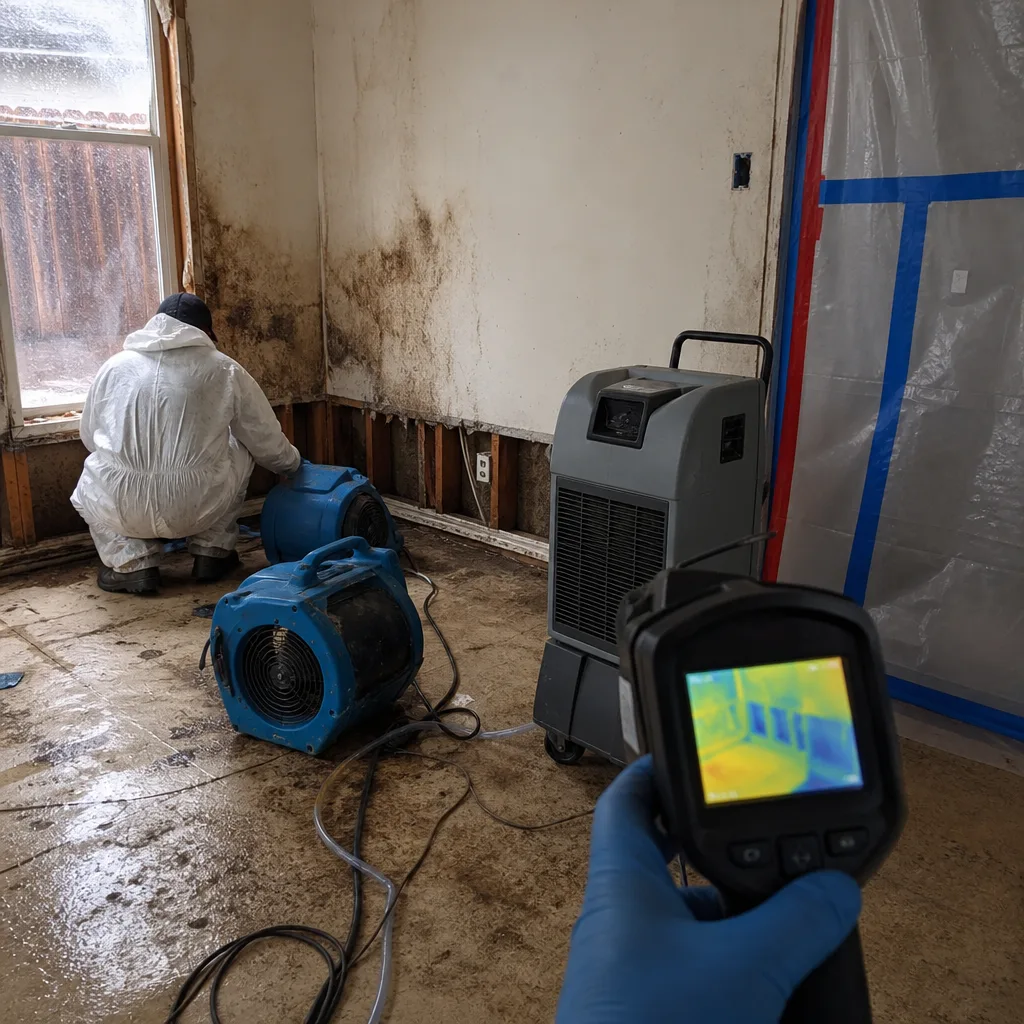 Before
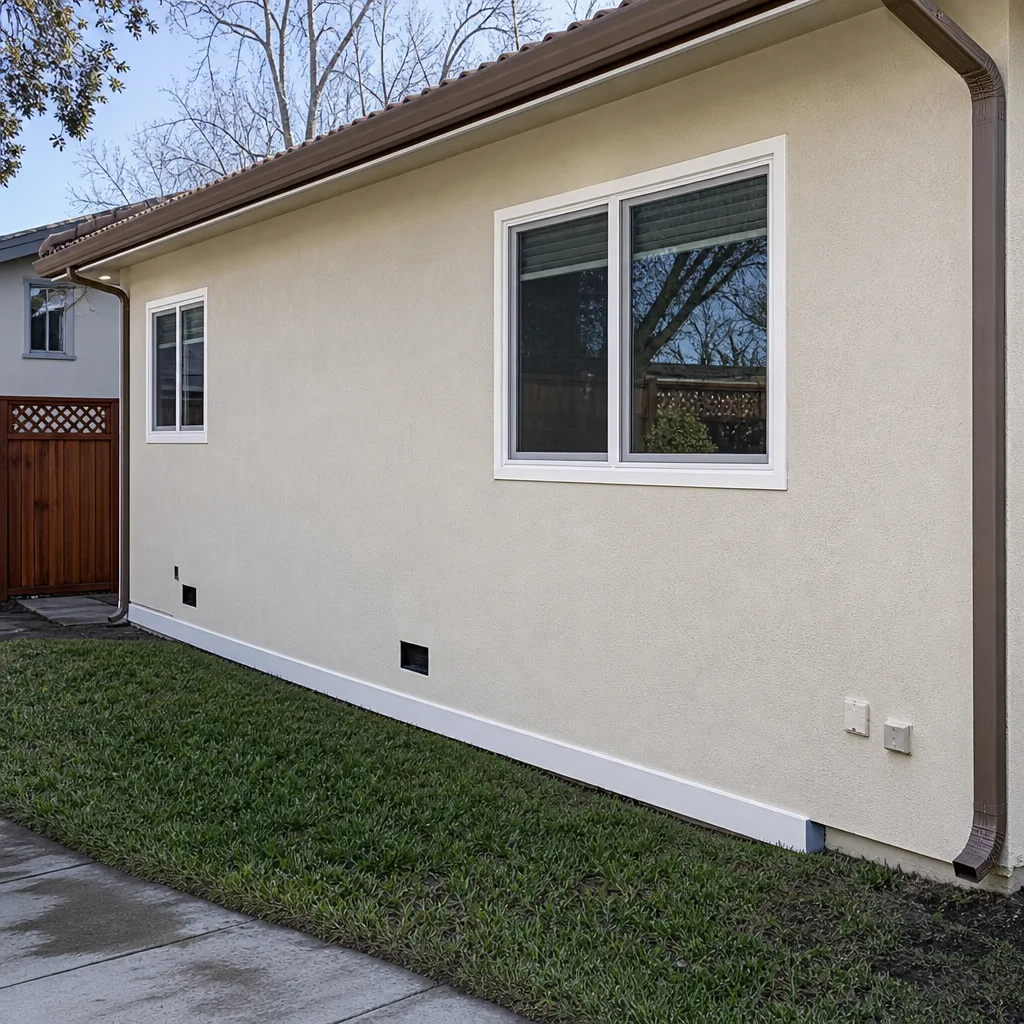 After
AfterStructural Drying & Dehumidification in San Jose, CA
Structural drying is the process of pulling trapped moisture out of building materials, framing, and subflooring after a water event, then controlling humidity until everything is genuinely dry at the core, not just dry to the touch. In San Jose, where older ranchers sit on slab foundations and crawlspaces trap damp air for months, it’s the step that separates a water damage job that’s actually finished from one that warps, smells, and grows mold six weeks later. Wendell Restoration San Jose sends background-checked, uniformed technicians with Dri-Eaz and Phoenix drying equipment, writes your price before any equipment gets unloaded, and texts you before-and-after photos so you can see the moisture readings drop. If you’re standing in a wet hallway right now, call (669) 200-0453 and a live person answers, 24/7. For the bigger picture on water damage work, you can start with our Water Damage Restoration page.
We handle structural drying as both a standalone service and as the critical middle phase of a full Water Damage Restoration in San Jose project. Here’s what you should know before you book anyone.
Key Takeaways
- Structural drying in San Jose typically ranges from $1,800 to $5,500 depending on affected square footage, material type, and how long water sat before extraction.
- Drying takes 3 to 5 days on average in San Jose’s Mediterranean climate, but summer heat waves can shorten that to 48 to 72 hours with the right equipment.
- Saltillo tile, plaster walls, and 1950s-era hardwood common in Willow Glen and Cambrian dry slower than modern materials and often need Injectidry floor mat systems.
- Every Wendell job includes a written price before work starts, the 365-Day Done Right Promise in writing, and before-and-after photo updates by text.
When You Need Structural Drying & Dehumidification
You don’t always see the need for structural drying. That’s the problem. Water travels down and sideways long after the visible puddle is gone, and San Jose’s older housing stock has plenty of places for it to hide. Here are the situations where we’re almost always needed:
- A supply line, water heater, or appliance leak that soaked into walls or flooring. Even a slow drip behind a kitchen cabinet can saturate drywall and the studs behind it. In neighborhoods like Rose Garden and Naglee Park, where original lath-and-plaster walls sit over fir framing, trapped moisture lingers for weeks.
- Hardwood or laminate flooring that is cupping, crowning, or lifting. Once you see the plank edges curl, moisture has already reached the subfloor. The visible damage is usually half the problem.
- A crawlspace that smells musty or shows condensation on joists. San Jose’s cool, foggy mornings push damp air under pier-and-beam homes in Willow Glen and downtown. If your floors feel cold and damp in August, you likely have a subfloor humidity problem.
- After extraction, before rebuild. If a restoration company rips out drywall and carpet but doesn’t run proper drying equipment before closing the walls back up, they’re sealing moisture in. We won’t do that, and we won’t let it happen under our roof.
- You had a leak months ago and now there’s a musty smell or visible mold speckling. That’s what happens when drying was skipped or cut short. The smell is usually the first sign that moisture is still moving through the structure.
- A toilet, tub, or sink overflow that dropped water between floors. San Jose’s split-level homes from the 1960s and 70s are especially good at channeling water into ceiling cavities where it sits against joists and insulation.
Our Structural Drying & Dehumidification Process
We follow IICRC and RIA standards on every drying job, which means the process is measured, not guessed. Here’s what actually happens when we arrive:
- Moisture mapping and baseline readings. We use thermal imaging and penetrating moisture meters to map where water traveled, not just where you saw it. Every affected area gets a baseline moisture reading so you can see the numbers change over time.
- Written price before equipment goes in. Before we unload a single fan, you get a written price for the full drying scope. The number on the screen is the number you pay, and you’ll get a digital invoice by text with a pay link. No surprises at the end.
- Equipment placement and containment. We position Dri-Eaz and Phoenix centrifugal air movers and low-grain refrigerant dehumidifiers to create airflow across every wet surface. In tight spaces like crawlspaces and wall cavities, we use Injectidry systems to force air through channels you’d never reach otherwise.
- Daily psychrometric monitoring. Psychrometric drying means we track humidity, temperature, and grain depression, which is the scientific measure of how hard the air is pulling moisture out of materials. We adjust equipment daily based on those numbers, not based on a timer.
- Final verification and documentation. When the numbers say the structure is dry, not when we decide it looks dry, we text you before-and-after photos with moisture readings attached. You get proof the job was done right, the way it should always be done.
This is the Relay Standard in action: book in a tap, live arrival time you can track, photo updates by text, price in writing, and a text invoice you can pay from a link. We built the process around what homeowners in San Jose expect from every other service they book on a phone.
Structural Drying & Dehumidification Pricing in San Jose
San Jose drying jobs cost more than a fan rental and a hope. You’re paying for real equipment, real monitoring, and a real guarantee. If you’re wondering how much water damage restoration costs in San Jose, here are honest ranges based on the jobs we see most often in this market:
- Single room, clean water (supply line, sink overflow): $1,800 to $2,800. This covers extraction if needed, 3 to 4 days of air movers and dehumidifier, daily monitoring, and final verification.
- Two to three rooms or a hallway plus affected walls: $2,800 to $4,200. More affected surface area means more air movers and more dehumidification capacity, plus the labor to open walls or pull baseboards where needed.
- Whole-floor or crawlspace drying: $4,200 to $5,500 and up. Crawlspace work in San Jose often means adding Injectidry mat systems and managing humidity in a space that fights you every morning with coastal fog.
- Factors that move the price: How long the water sat before you called, whether walls or ceilings need to be opened, material type (plaster and Saltillo tile dry slower than drywall and carpet), and whether mold treatment or antimicrobial application is required as part of the job.
Every estimate is free, and it comes with a written price before any work starts. Call (669) 200-0453 and we’ll give you a straight number for your specific situation, not a vague range that changes when the bill arrives.
Why San Jose Homes Dry Differently
San Jose’s climate is dry in summer, damp in winter, and foggy near the foothills, which means drying strategy shifts by season and neighborhood. In winter months, when outdoor humidity sits in the 70 to 80 percent range for days at a time, dehumidifiers work harder and drying takes longer, especially in uninsulated garages and crawlspaces. In the summer, when daytime temperatures climb into the 90s, we can often cut drying time to 48 to 72 hours by using the outdoor air as an assist, but only when it’s genuinely drier outside than inside.
Older neighborhoods like Alum Rock, Japantown, and the Naglee Park area are full of homes built before modern vapor barriers and insulation standards. Those structures hold moisture differently than a 1990s build in Evergreen or a 2000s build in Berryessa. We account for that in our drying plan, because a one-size-fits-all approach in this city leaves moisture behind.
Why Wendell Restoration San Jose
We’re not the only company in San Jose with drying equipment. We’re one of the few that backs the work with a written 365-Day Done Right Promise: if it’s not done right, we make it right, and every job has a free second visit if the repair fails. That’s not a phone-script promise. It’s in writing on every single job.
We’re part of the Relay Home Co. family, founded in 2006, and this location is independently owned and operated to The Relay Visibility Guarantee. That’s the commitment to show up with a live arrival time you can track, a background-checked uniformed technician, a price in writing, and photo proof of the finished job. When you need water damage restoration near you in San Jose, it doesn’t keep business hours, and neither does our phone line: a live person answers every call, 24/7, not a voicemail, not a callback queue, not a phone tree.
Our techs carry Dri-Eaz and Phoenix equipment and follow IICRC and RIA protocols, the same standards used on commercial loss sites. The difference is you get the big-commercial process with the phone-first, price-up-front experience a homeowner in San Jose actually wants.
FAQs – Structural Drying & Dehumidification
How much does structural drying cost in San Jose?
Structural drying in San Jose typically costs between $1,800 and $5,500 depending on the size of the affected area, what materials are wet, and how long the water sat before drying started. Single-room jobs run $1,800 to $2,800, while whole-floor or crawlspace jobs run $4,200 and up. Call (669) 200-0453 for an exact quote, it is free and it is in writing before any work starts.
How long does structural drying take in San Jose?
Most San Jose drying jobs finish in 3 to 5 days, though summer heat can shorten that to 48 to 72 hours and winter humidity can stretch it to a week. We track moisture levels daily with psychrometric readings and keep equipment running until the structure is genuinely dry, not until a timer says we’re done.
Is structural drying covered by homeowners insurance?
Structural drying is covered by most standard homeowners insurance policies in California when the cause of the water damage is sudden and accidental, like a burst supply line or an appliance failure. Gradual leaks and maintenance issues are usually not covered. We document every stage with photos and moisture readings, so you have the evidence your adjuster needs.
Can I just rent fans and dehumidifiers from a hardware store?
Rental fans and small dehumidifiers move air, but they don’t create the grain depression needed to pull moisture out of framing, subflooring, and wall cavities. They also don’t tell you when the structure is actually dry. A surface can feel dry while the studs behind it sit at 25 percent moisture content, which is exactly where mold gets its start. The equipment we run, Dri-Eaz and Phoenix units, is designed for structural drying, not air circulation, and we monitor the numbers daily until they hit the target.
Get a Written Price for Structural Drying in San Jose
If you’re looking at a wet floor, a water-stained ceiling, or a crawlspace that smells like a damp basement, call (669) 200-0453. A live person answers, 24/7, and you’ll get a free estimate with a written price before any work starts. No phone tag, no vague arrival windows, no price that changes at the door.
Written by Blake Sorensen, Owner at Wendell Restoration San Jose, serving San Jose.