
Last updated October 16, 2026
 Water damage drying
 Fire & smoke cleanup
 Mold remediation
 Storm response
 Sewage cleanup
 Reconstruction
Free visual inspection and a written scope of work before any mitigation begins - photos, moisture readings, and drying logs go in your claim file
The scope we write is the scope we bill. Anything new gets shown to you, in writing, before we touch it.
Get your free estimateDamage Restoration Warning Signs: A San Jose Homeowner’s Reference Guide
Here’s the uncomfortable truth about water damage in San Jose homes: it rarely announces itself with a dramatic burst pipe. Most of the time, it starts as a faint discoloration on a ceiling, a cabinet door that sticks a little more than it used to, or a musty note in the air that comes and goes. By the time a homeowner in Willow Glen or Almaden Valley recognizes the problem, the moisture has often been working behind drywall for months. This guide assigns a response timeline to every common warning sign, so you know which problems demand a call today, which can wait a few weeks, and which just need a camera and a calendar. We’ve spent nearly two decades pulling wet drywall out of San Jose houses, from Victorian-era stock downtown to 1970s ranchers in Cambrian, and the pattern is always the same: early detection costs hundreds, late detection costs thousands.
Restoration work we handle
Quick Answer
The most reliable water damage warning signs in a San Jose home are: persistent musty odors (an active mold indicator), water stains on ceilings or walls that grow or darken over time, bubbling or peeling paint, warped or buckling flooring, cabinet bases that swell near plumbing fixtures, and unexplained spikes in your water bill. Active moisture problems demand a response within 24 to 48 hours, while cosmetic staining that has not changed in size for 30 days or more can be monitored and documented. A $30 moisture meter test tells you which category you’re in.
Table of Contents
- The Tiered Warning Sign System: How to Triage Any Finding
- San Jose Construction Types and Their Signature Warning Signs
- The $30 Moisture Meter Test: Separating Active Leaks from Old Stains
- The Six Places Water Damage Hides Until It’s Expensive
- Photo Documentation Protocol: Protecting Yourself Before You Call Anyone
- Reading Warning Signs Through an Insurance Claim Lens
- Common Mistakes to Avoid
- When to Call a Professional
- Frequently Asked Questions
- The Bottom Line
The Tiered Warning Sign System: How to Triage Any Finding
Not every water stain is an emergency. Treating every cosmetic blemish like a five-alarm restoration project wastes your money and a contractor’s time. But treating every active leak as a wait-and-see situation is how a $400 repair becomes a $12,000 mold remediation and full wall rebuild, a dilemma we explore in our DIY vs Professional Damage Restoration: The San Jose Homeowner’s Decision Guide. The tiered system below gives you a decision framework so you can triage what you find without calling a contractor for every ceiling spot.
Tier 1: Call Today (Active Moisture, Response Within 24 to 48 Hours)
These signs indicate water is currently moving or standing somewhere it should not be. Every hour of delay expands the damage zone. Water wicks upward through drywall at roughly one inch per hour and downward through subfloor even faster. A small leak behind a wall today becomes a full cavity soak by Friday.
- Water that is actively dripping, pooling, or running from any surface, pipe, appliance, or fixture.
- Sudden ceiling bulges or sagging drywall, especially after rain. The drywall is holding water weight and can collapse without warning.
- A persistent musty or earthy smell that does not dissipate with ventilation. A musty smell in a San Jose home is not a minor inconvenience; it is a positive mold indicator. By the time you can smell mold, colony growth has typically been active for 72 hours or more, and the source is almost never where the smell is strongest.
- Wet carpet or flooring with no obvious spill source, particularly in a slab foundation home.
- Water bill spikes of 20% or more with no change in household usage patterns. This often indicates a hidden supply line leak inside a wall cavity or under the slab.
- Sudden, unexplained warping or buckling of hardwood, laminate, or vinyl plank flooring within a 48-hour window.
For Tier 1 findings, shut off the water supply to the affected area if you can identify the source. If you cannot locate a shutoff, shut the main. Then call a professional. We have walked into San Jose homes where the homeowner waited three days on a “small” ceiling drip, and by then the water had traveled along the joists into two adjacent rooms. Speed matters more than anything else on Tier 1.
Tier 2: Address Within 30 Days (Developing Problem, Not Yet an Emergency)
These signs point to recurring or slow moisture intrusion that has not yet reached critical mass. You have a window to fix the underlying issue before it becomes a full restoration project, but that window is measured in weeks, not months.
- Water stains on ceilings or walls that grow larger over a two-to-four-week observation period. Growth means active moisture behind the surface.
- Efflorescence on concrete or stucco: that white, chalky mineral deposit that appears when water moves through masonry and evaporates, leaving salts behind. It confirms water is passing through the material.
- Peeling or bubbling paint in bathrooms, kitchens, or near windows that recurs after repainting. The paint is failing because moisture is pushing through from behind.
- Cabinet bases that swell, darken, or crumble under sinks or near dishwashers, even when you have never seen standing water. Chronic slow drip.
- Condensation on interior walls in summer, especially on exterior-facing walls in poorly insulated San Jose homes. Chronic condensation feeds mold in wall cavities.
- Doors or windows that begin sticking in their frames during wet months, when they operated fine in dry months. Swelling from hidden moisture absorption.
Tier 2 items need a fix within 30 days. Document them with photos now, then call for an assessment. Many Tier 2 problems resolve with a targeted repair rather than full Water Damage Restoration in San Jose.
Tier 3: Monitor and Document (Cosmetic or Historical, No Active Moisture)
These signs represent past damage that has dried and stabilized. They do not require action today, but they do require a baseline record so you can detect change. A stain that stays exactly the same size and color for 60 days is historical. A stain that grows is Tier 2 or Tier 1.
- Uniform, unchanging water rings on ceilings, especially under bathrooms or around old roof penetrations in San Jose homes built before the 1990s.
- Stains that are completely dry to the touch and have a consistent border with no spreading edges.
- Faded or yellowed areas in attics around old vent boots that have been resealed and show no new moisture after rain.
- Surface rust on exposed pipes or fasteners in dry locations like garages or utility closets. Rust confirms past moisture; a moisture meter confirms whether it is current.
For Tier 3 findings, take a photo with a ruler or coin for scale, note the date, and set a calendar reminder to recheck in 30 days. If nothing has changed in size, color, or texture, you are dealing with history, not an active problem.
San Jose Construction Types and Their Signature Warning Signs
San Jose is not one housing market. It is a patchwork of building eras, each with its own failure modes. A warning sign that screams “emergency” in a 1920s bungalow in Japantown might be a nothingburger in a 2015 tract home in Evergreen. Here is what we look for, by construction type.
Stucco Exteriors (1950s Through 1980s Ranches and Split-Levels)
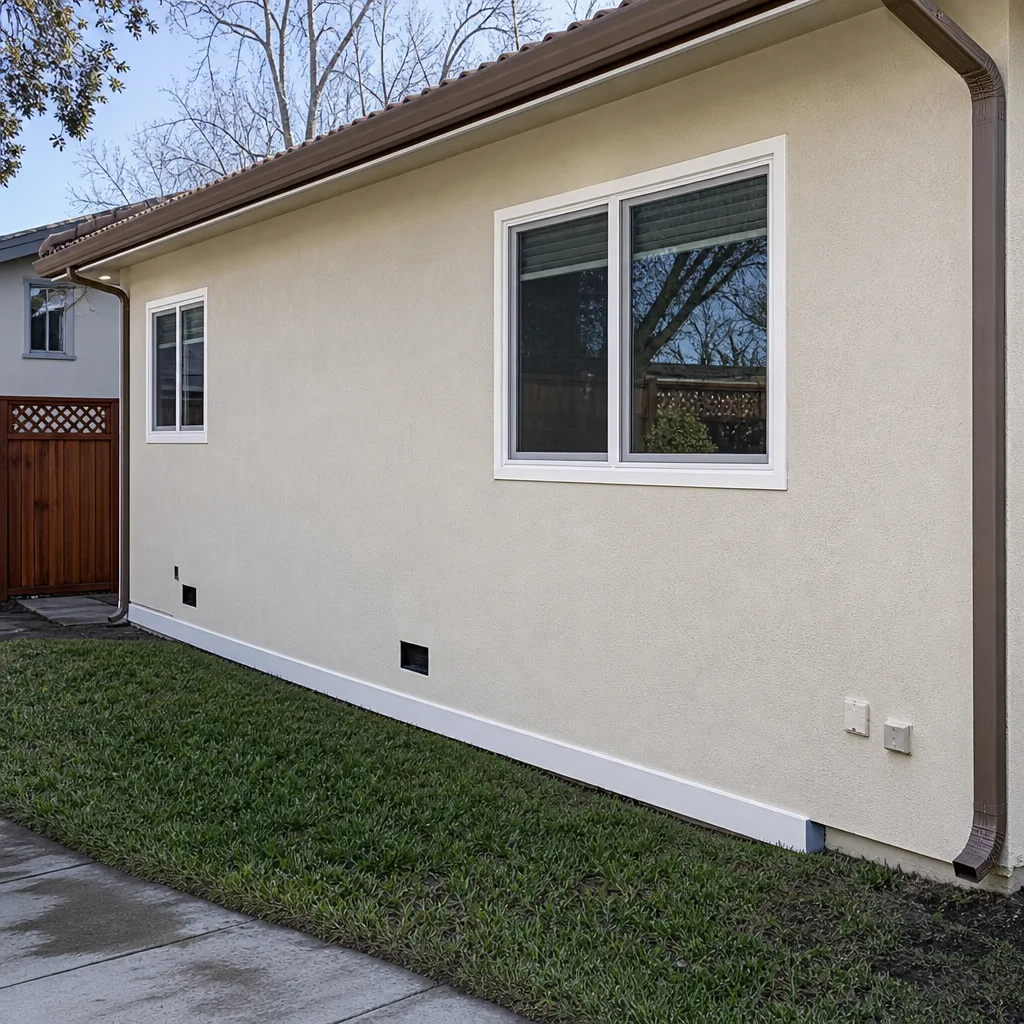
Stucco is San Jose’s default exterior finish for mid-century construction, and it has a specific failure signature: efflorescence. That is the chalky white deposit that appears on stucco when water penetrates the surface and migrates through the wall system. In Rose Garden and Willow Glen, where original 1950s and 1960s stucco is still common, efflorescence on an exterior wall facing the afternoon sun is a reliable indicator that water is getting behind the stucco, usually through failed window flashing or cracked exterior trim. Interior drywall staining in the same wall cavity usually appears months later. By the time you see interior staining, the exterior warning sign has been present for a while.
Expansive Clay Soil Foundation Zones (Almaden Valley, Blossom Valley, South San Jose)
San Jose sits on significant zones of expansive clay soil, particularly on the south and southeast sides of the city. Clay soil expands when wet and contracts when dry, exerting enormous pressure on foundation walls and slabs. The warning sign homeowners miss: hairline foundation cracks that change width seasonally. A crack that opens in winter rains and closes in summer dry spells is not a structural failure; it is your foundation flexing with the clay. But a crack that grows steadily wider, or that appears suddenly along with sticking doors and diagonal wall cracks above it on the interior, can indicate a plumbing leak saturating the soil under one corner of the slab. If you live in Almaden Valley and your doors start sticking for the first time during a rainy winter, check your water bill before you call a structural engineer, and see our Seasonal Damage Restoration Care for San Jose: Year-Round Homeowner’s Guide for more on soil-related seasonal patterns. We have responded to more than one San Jose slab leak where the homeowner thought they had a foundation problem.
Raised Foundation Crawl Spaces (Pre-1950s Homes, Naglee Park, Japantown, Downtown)
San Jose’s older homes sit on raised foundations with accessible crawl spaces, which is both good news and bad news. The good news: you can see problems early. The bad news: almost no one looks. The warning sign specific to crawl spaces is not visible from the living room. It is a persistent earthy smell that gets stronger after rain, warmer in summer, or any smell of “damp basement” in a house with a crawl space. That smell means the soil under your house is staying wet, usually from a plumbing leak in the crawl space, poor drainage at the perimeter, or a failed vapor barrier. In our experience with pre-war San Jose housing stock, a musty smell that strengthens after rain points to perimeter drainage issues; a constant musty smell that never changes points to a plumbing leak under the floor.
Modern Construction (2000s and Later, Evergreen, Berryessa, North San Jose Condos)
Newer San Jose construction has different failure modes. The most common one we see is HVAC-related condensation in poorly insulated mechanical closets and chase ways. High-efficiency HVAC systems produce significant condensation, and when the drain pan or condensate line is installed in an unconditioned wall cavity, the moisture migrates into drywall over years. The warning sign: water stains on the ceiling directly below an interior closet that houses the air handler, or flaking texture on the wall adjacent to a vertical duct chase. This is not a roof leak. It is condensation management failure, and it is more common in San Jose condos and attached housing than in single-family homes.
The $30 Moisture Meter Test: Separating Active Leaks from Old Stains
This is the single most useful tool a San Jose homeowner can own for damage triage, and it costs less than dinner for two. A pinless moisture meter reads moisture content through drywall, plaster, and wood without leaving holes. You press the sensor plate flat against the surface, and the meter gives you a relative moisture reading in seconds. It will not tell you exactly where the leak is, but it will tell you whether the stain in front of you is wet, damp, or dry. That is the only question that matters for triage.
Step-by-Step: How to Test a Water Stain
- Buy a pinless moisture meter with a drywall setting. The General Tools MMD4E and similar models run $25 to $45 at any big-box hardware store. You do not need the pro model.
- Calibrate the meter to your home’s dry baseline. Test a wall in the same room that you know is dry, away from plumbing and exterior walls. Record that number. It is your reference point.
- Test the stained area. Press the meter flat against the center of the stain. Hold it there for two seconds and record the reading.
- Test the perimeter of the stain. Move the meter outward in a cross pattern, testing at the edge of the visible stain and two inches beyond it, where the drywall looks normal.
- Test the same material type in another room. Drywall on an interior partition wall gives you the cleanest comparison, since exterior walls can have elevated moisture from weather without a leak.
- Interpret the results. If the stain reads within 10 to 15 points of your dry baseline, you are looking at historical damage. If the stain reads significantly higher than the surrounding drywall by 20 points or more, and the elevated readings extend beyond the visible stain, you have active moisture behind the surface. That is Tier 1 or Tier 2, not Tier 3.
We run this same test on every assessment visit, using professional-grade meters from Dri-Eaz and Phoenix. You do not need our equipment to get a reliable answer, but you do need to act on what the meter tells you. A dry stain can wait. A wet one cannot.
The Six Places Water Damage Hides Until It’s Expensive
Water follows gravity and the path of least resistance, which means it usually ends up where you cannot see it. In our restoration work across San Jose, we find most advanced water damage in the same six locations, over and over, because these areas are not visually accessible during normal home use. By the time damage becomes visible at these sites, the moisture has typically been present for weeks or months, and mold is often already established.
1. Under Dishwashers
The supply line, drain hose, and pump connections live under your dishwasher, behind a toe kick panel that most homeowners never remove. A slow drip from the supply line or a failing pump seal pools on the subfloor, wicking into the adjacent cabinet bases and under the flooring. The first visible sign is often a musty smell when you open the dishwasher, or the laminate floor in front of the appliance starting to cup. By then, the subfloor underneath is saturated, and water has usually migrated under the floor covering into the surrounding kitchen floor assembly. Pull the toe kick twice a year and look for water staining, mold, or softened MDF.
2. Behind Refrigerators
The icemaker line behind a refrigerator is one of the most common slow-leak sources in San Jose kitchens. The line is usually 1/4-inch plastic or copper tubing running behind the appliance, and the leak is often no more than a few drops per minute. That is enough to saturate the drywall behind the fridge and the flooring underneath, while the front of the kitchen looks fine. The warning sign here is not visual; it is the smell. A musty odor that seems to come from the kitchen floor near the refrigerator, or small dark spots on the baseboard behind the appliance, are the indicators. Pull the fridge out once a year and inspect the line and the wall behind it.
3. Inside Wall Cavities at Supply Line Penetrations
Every plumbing fixture in your home passes through a wall cavity: sink supply lines, shower valves, tub spouts, toilet supply lines. The connections at these penetrations are inside the wall, behind tile or drywall, and a slow drip at any of them soaks the wall cavity, the bottom plate of the framing, and eventually the subfloor below. The warning signs are subtle: grout lines that darken at the bottom of a shower surround, a baseboard that pulls away from the wall in a bathroom, or a soft spot on the wall behind a toilet. In slab-foundation San Jose homes, water in these cavities often travels down inside the wall to the slab, where it spreads under the flooring with no visible path to the surface. That is when a moisture meter becomes your only reliable detection tool.
4. Under Bathroom Tile
Tile and grout are not waterproof. They are water-resistant surfaces over a waterproofing layer that should be behind them, and in many San Jose homes, especially those remodeled before current waterproofing standards, the waterproofing is either missing or has failed. Water that gets through grout lines sits on the mortar bed underneath, keeping the subfloor chronically damp. The warning sign that most homeowners miss: a grout line that never seems to dry after showers, or a darkening at the perimeter of the bathroom floor where tile meets the tub or the wall. By the time tiles start loosening or the floor feels springy, the subfloor is compromised and the repair is structural, not cosmetic.
5. Attic Spaces Above Bathrooms and Laundry Rooms
Bathroom exhaust fans that vent into the attic instead of through the roof, a common shortcut in older San Jose construction, pump moist air into the attic space with every shower. That moisture condenses on the underside of the roof sheathing and on insulation, creating chronic dampness that feeds mold and eventually rots the sheathing. The warning sign is visible from the living space: you will see a water stain on the ceiling around the exhaust fan, or worse, no stain at all but a persistent musty smell that gets stronger after showers. The fix is simple, which is why this one frustrates us: the fan needs to vent outside, not into the attic. The damage from years of venting into the attic is not always simple to repair.
6. Under the Water Heater
Water heaters fail slowly before they fail catastrophically. The warning sign is a small, persistent puddle at the base of the tank, or rust staining on the floor around the unit. In a garage-mounted water heater, which is the default in most San Jose tract homes, the puddle may evaporate before you ever see it, leaving behind a rust ring or mineral staining on the concrete. That means the tank is weeping, and weeping tanks eventually burst. If you see any moisture, staining, or rust around your water heater, that is a Tier 1 find. A burst 40-gallon tank releases 330 pounds of water in minutes, and in a second-story interior closet installation, which is common in newer San Jose condos, that water moves straight down through the building.
Photo Documentation Protocol: Protecting Yourself Before You Call Anyone
Insurance adjusters evaluate water damage claims based on evidence, and the single most compelling evidence is before-and-after photography with timestamps. A documented timeline of a warning sign does two things: it establishes that the damage occurred within the policy period, and it shows due diligence on your part, which insurance carriers scrutinize. Here is the protocol we recommend to every San Jose homeowner, and it applies whether you are filing a claim today or just building a baseline record.
Step-by-Step: Building Your Damage Photo File
- Shoot wide, then tight. Start with a photo of the entire room so the location is unmistakable. Then move in for detailed shots of the specific stain, crack, or discoloration. Include a reference object for scale: a ruler, a coin, or a standard business card.
- Use timestamp metadata. Most phone cameras embed timestamps in the file. Check that your camera app has this enabled. If not, take a second photo holding up a phone showing the date and time.
- Photograph the same finding from two angles. One straight-on, one at a 45-degree angle. The angled shot captures surface texture changes that disappear in head-on photos.
- Repeat the shoot every 30 days for Tier 3 items. Same angles, same lighting conditions where possible. Compare the photos side by side. This is how you detect growth that your eye misses day to day.
- Store everything in a dedicated folder with a naming convention like “Ceiling-stain-master-bedroom-2024-01-15.” Do not bury these photos in a camera roll with 4,000 other images.
- When you call a professional, share the photos. A good restoration company will want to see them before they dispatch, and having a visual record speeds up the estimate process. At Wendell Restoration San Jose home, our technicians review your photos during the first call so we can tell you what we think you are dealing with before we ever arrive.
The insurance claim value of this protocol cannot be overstated. We have seen San Jose homeowners recover significantly more on water damage claims because they had a dated photo trail showing exactly when a stain first appeared and how it progressed. Adjusters respond to evidence, and a 30-day photo series is evidence that removes ambiguity about when and how the damage occurred.
Reading Warning Signs Through an Insurance Claim Lens
Every warning sign in this guide has an insurance implication, and understanding that before you call anyone changes how you document and respond. Homeowners insurance covers sudden and accidental water damage, which means a supply line that bursts is covered, while a slow leak that has been dripping for six months is often classified as a maintenance issue and denied. The distinction between those two scenarios often comes down to your documentation. If you can show that you monitored a warning sign, responded promptly when it worsened, and called a professional when it became active, your claim is in much stronger shape than if the adjuster finds six months of unreported damage with no record of homeowner diligence.
The other insurance reality: water damage claims almost always involve multiple parties. The restoration company that dries the structure, the plumber who fixes the source, the contractor who rebuilds, and the adjuster who authorizes payment. Having a single company coordinate the restoration and repair work simplifies the process. Our team at Wendell Restoration San Jose deals directly with adjusters, providing photo-documented assessments and written scopes that match the language insurance carriers use. We have spent years translating homeowner problems into adjuster-friendly documentation, and it consistently results in smoother claims and more complete coverage for our clients. For a deeper look at the process, see our Water Damage Repair in San Jose page.
Common Mistakes to Avoid
- Painting over a water stain without finding the source. The stain comes back within months, and by then the moisture behind the drywall has often spread further. Paint is a cosmetic fix for a structural problem, and it makes future detection harder because you have hidden the evidence.
- Treating every musty smell as a housekeeping issue. A musty smell in a San Jose home is a positive mold indicator, not a sign that you need to clean more. Colony growth has typically been active for 72 hours or more by the time the smell registers, and the source is almost never where the smell is strongest. Deodorizers and candles mask the symptom while the colony expands.
- Assuming a small stain means a small problem. A 4-inch ceiling stain can mean a pinhole in a supply line that has been spraying inside the wall cavity for days. Water travels along joists and down wall cavities, so the visible stain is frequently the exit point, not the source.
- Skipping the moisture meter and asking a contractor to “just take a look.” Contractors who “take a look” without testing moisture content are guessing. A $30 pinless moisture meter test takes two minutes and tells you whether the stain is wet, dry, or borderline. Run the test before you call so you know whether you are dealing with active moisture or history.
- Waiting to file insurance until the problem “gets bad enough.” Insurance policies cover sudden and accidental damage, not slow deterioration. The longer you wait, the more the adjuster sees a maintenance failure rather than a covered event. Document early, report when it becomes active, and do not let months go by without action.
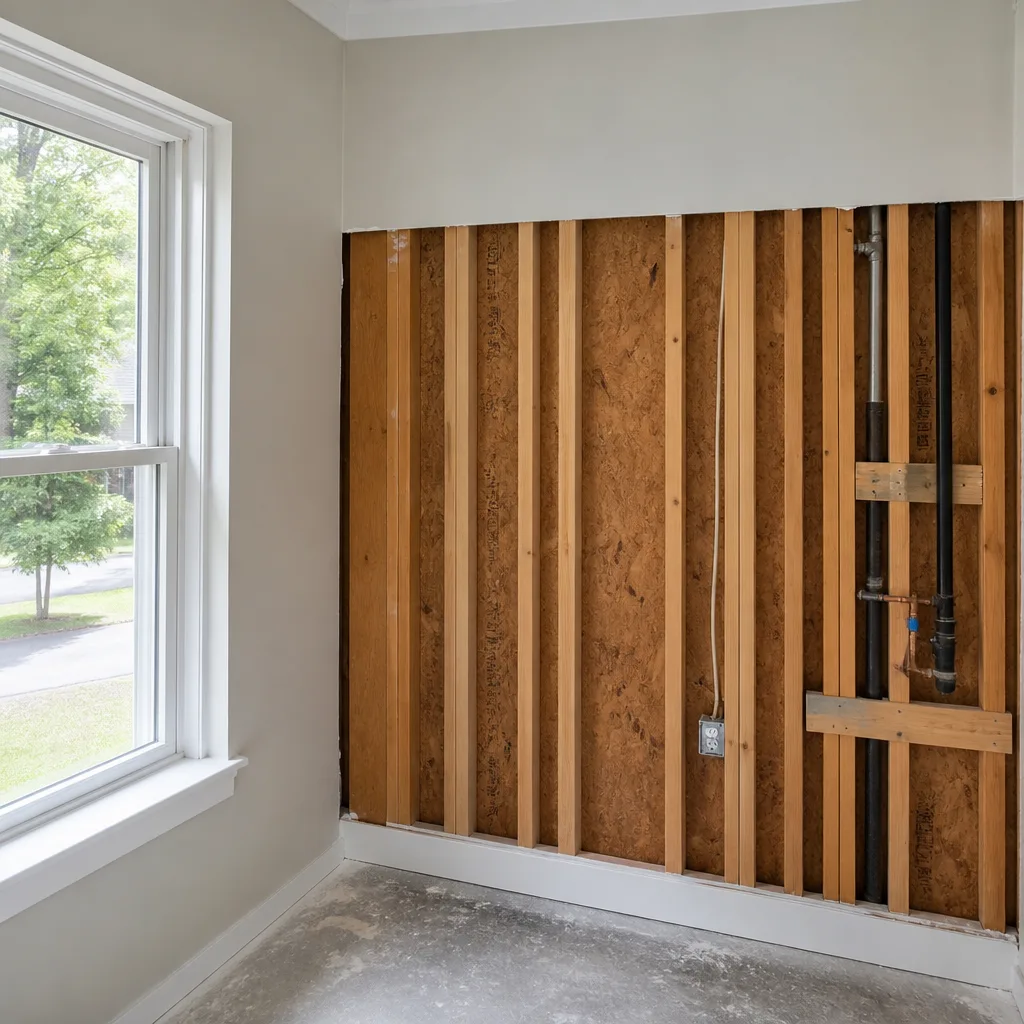
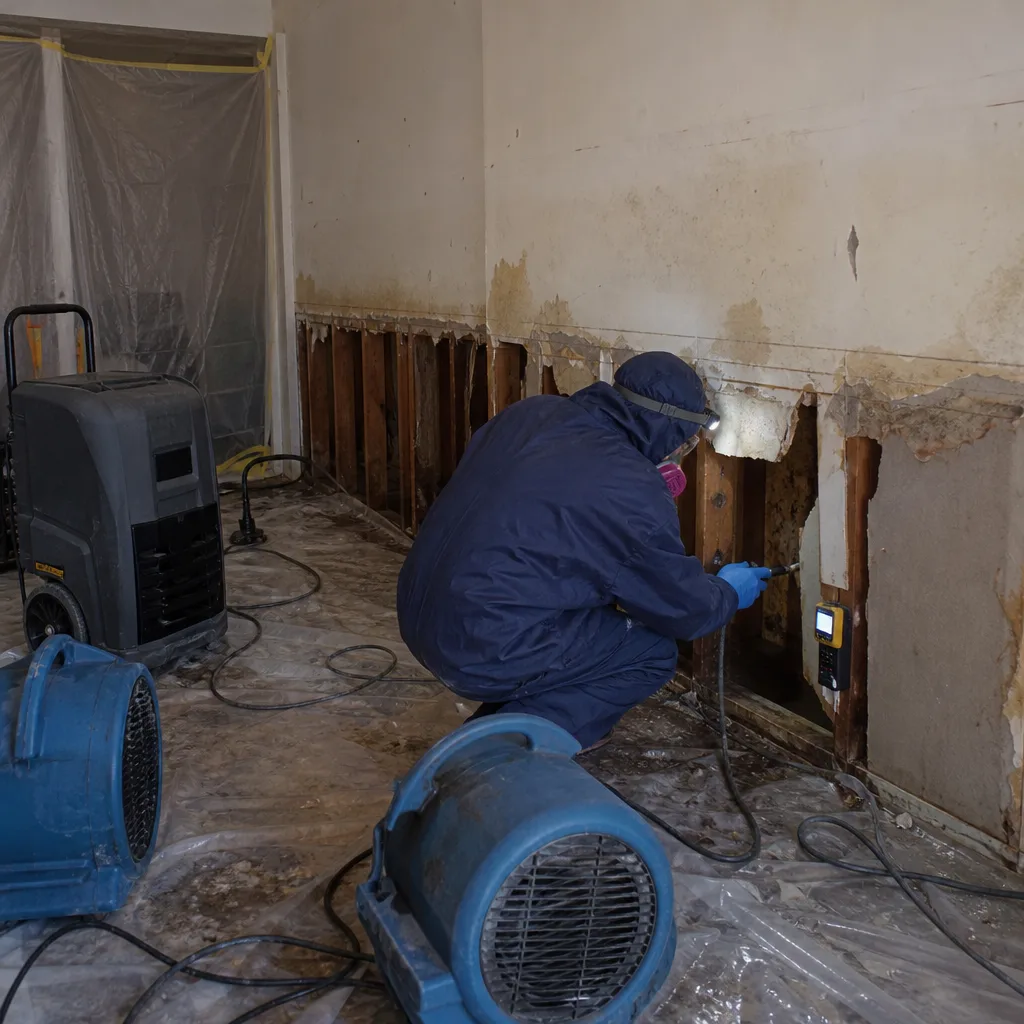
- Opening up a wall to “see what’s inside” without professional guidance. If the moisture behind the wall is from a sewage line or has been sitting for weeks, opening the cavity releases mold spores into your living space and the trapped moisture accelerates growth. Professionals use containment, negative air pressure, and antimicrobial treatment under IICRC standards. Do not turn a contained problem into an airborne one.
- Trusting a contractor who gives a price over the phone without seeing the job. A verbal estimate for water damage restoration is not an estimate; it is a guess with a sales goal attached. Any legitimate restoration company will want photos at minimum, and for active Tier 1 problems, an on-site assessment with moisture mapping. Insist on a written scope before any work starts. That is the standard we have held at Wendell since we began serving San Jose in 2006, and it protects you from the most common complaint in this industry: a price that changes after the work begins.
When to Call a Professional
Call a professional the same day if you have active dripping, pooling, or flowing water; a bulging or sagging ceiling; a musty odor that appeared suddenly or is growing stronger; a visible mold patch larger than a dinner plate; or any water bill spike you cannot explain. These are Tier 1 conditions, and the cost of waiting is measured in thousands of dollars, not hundreds. Call within the week for Tier 2 findings that have not responded to DIY fixes, such as recurring stains, persistent efflorescence on stucco, or cabinet bases that continue swelling after you have tightened the plumbing. Mold Remediation in San Jose is not a weekend DIY project when the colony has moved inside a wall cavity. For anything uncertain, a professional assessment costs less than the damage caused by guessing wrong. Wendell Restoration San Jose offers free estimates in San Jose – call (669) 200-0453 and a live person will answer, 24/7.
Frequently Asked Questions
Test it with a pinless moisture meter. If the stained area reads within 15 points of a known-dry wall in the same room, the stain is historical and you can monitor it. If the stain reads 20 points or more above the dry baseline, especially if the elevated readings extend beyond the visible stain edges, you have active moisture behind the surface. That requires a response within 48 hours. The test takes two minutes and a $30 meter.
A musty smell means mold is actively growing somewhere in your home. The smell is a byproduct of mold metabolism, and by the time it is detectable to a human nose, the colony has typically been growing for at least 72 hours. The source is rarely where the smell is strongest, because air currents move the odor through the home. You need a professional mold assessment to locate the colony and determine the moisture source feeding it.
Water soaking into drywall, subfloor, and framing begins causing measurable damage within 24 hours. Drywall wicks moisture upward at approximately one inch per hour. Plywood subfloor begins delaminating within 48 to 72 hours of saturation. Mold can establish on wet organic material within 48 to 72 hours. Structural framing decay takes months or years, but the finish materials that protect your framing fail in days, which exposes the structure to ongoing moisture.
Most policies cover the damage from sudden and accidental water releases, such as a burst supply line. Slow leaks that have been ongoing for weeks or months are often classified as maintenance issues and may be denied. Your coverage depends on your specific policy language and the cause of the leak. The best way to protect yourself is to document warning signs with timestamped photos, respond promptly when a sign becomes active, and report the claim with evidence of due diligence. We coordinate directly with adjusters on San Jose water damage claims, and our photo-documented assessments are prepared to match what insurance carriers need to see.
Water damage restoration is the process of drying a structure back to its pre-loss moisture content after a water event, using professional equipment and psychrometric monitoring. Mold remediation is the process of containing, removing, and treating active mold growth that results from moisture problems. The two services often overlap, but they are distinct. In San Jose, homes with persistent humidity or chronic plumbing leaks can develop mold without a single dramatic water event. A restoration company that handles both under IICRC standards can address the full scope without you managing multiple vendors.
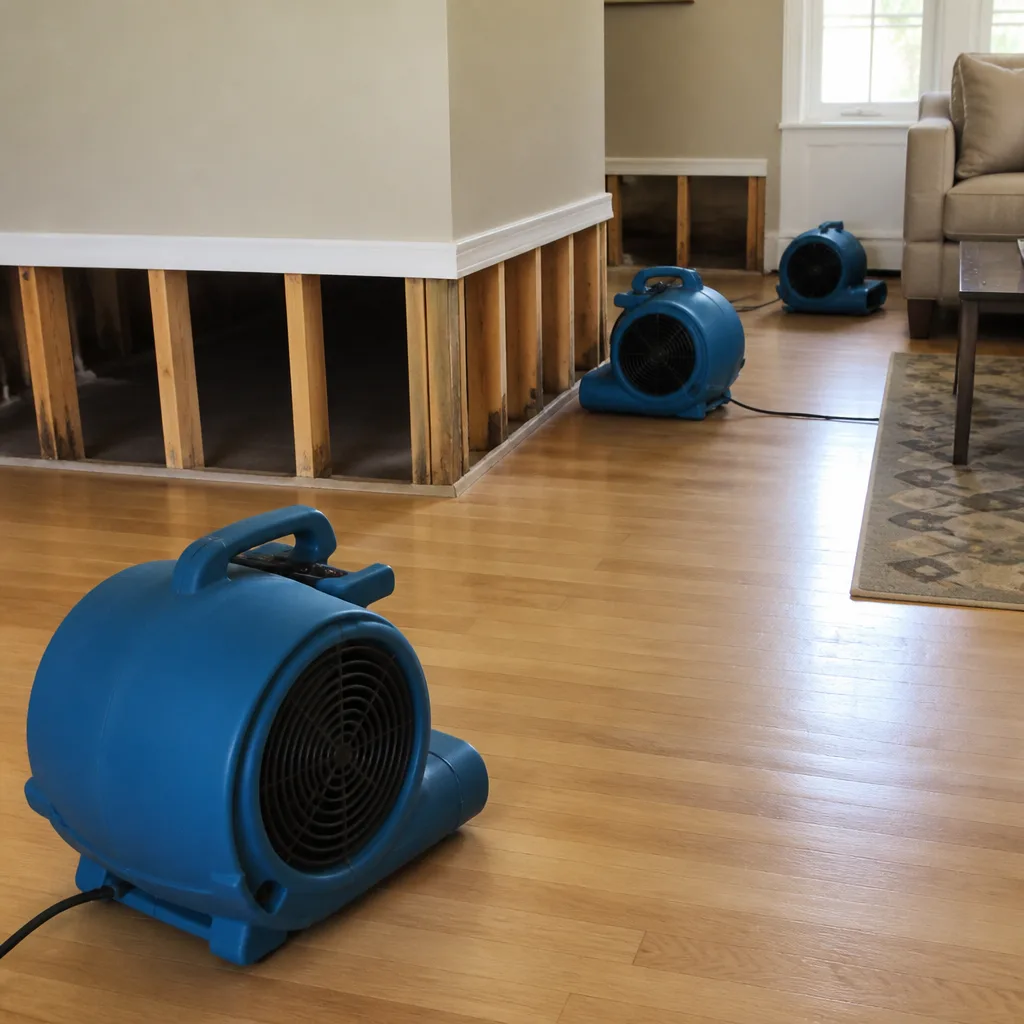
For small, contained spills on non-porous surfaces, yes. For water that has penetrated drywall, flooring, or wall cavities, no. Consumer fans and dehumidifiers do not move enough air volume or remove enough moisture per day to dry structural materials to the standard that prevents mold, which is below 16% moisture content for wood and below 4 on a relative moisture scale for drywall. Professional restoration companies use high-velocity air movers and commercial dehumidifiers from brands like Dri-Eaz, Phoenix, and XPOWER, deployed according to IICRC psychrometric standards, to dry a structure in 3 to 5 days. A homeowner with box fans will take weeks, and the mold will establish long before the structure is dry. If water has gone under flooring or into a wall cavity, call a professional. The cost of proper drying is a fraction of the cost of mold remediation and rebuild later.
The Bottom Line
Water damage in a San Jose home is a time-weighted problem. The same leak that costs $400 to fix when it is a damp spot behind a cabinet costs $12,000 when it has been soaking a wall cavity for four months and the mold has gone airborne. Every warning sign in this guide deserves one of three responses: call today, fix within 30 days, or document and monitor. The tiered system exists so you do not have to call a contractor for every ceiling stain, and so you do not ignore the one stain that was never going to dry on its own. Buy a moisture meter, set up a photo documentation routine, and check the six hidden locations once a year. For additional guidance, explore more guides & resources on protecting your San Jose home. Most of the worst water damage we see in San Jose was visible long before it was catastrophic. The homeowner just did not know what they were looking at.
Written by Blake Sorensen, Owner at Wendell Restoration San Jose, serving San Jose since 2006.
See the difference
 Before
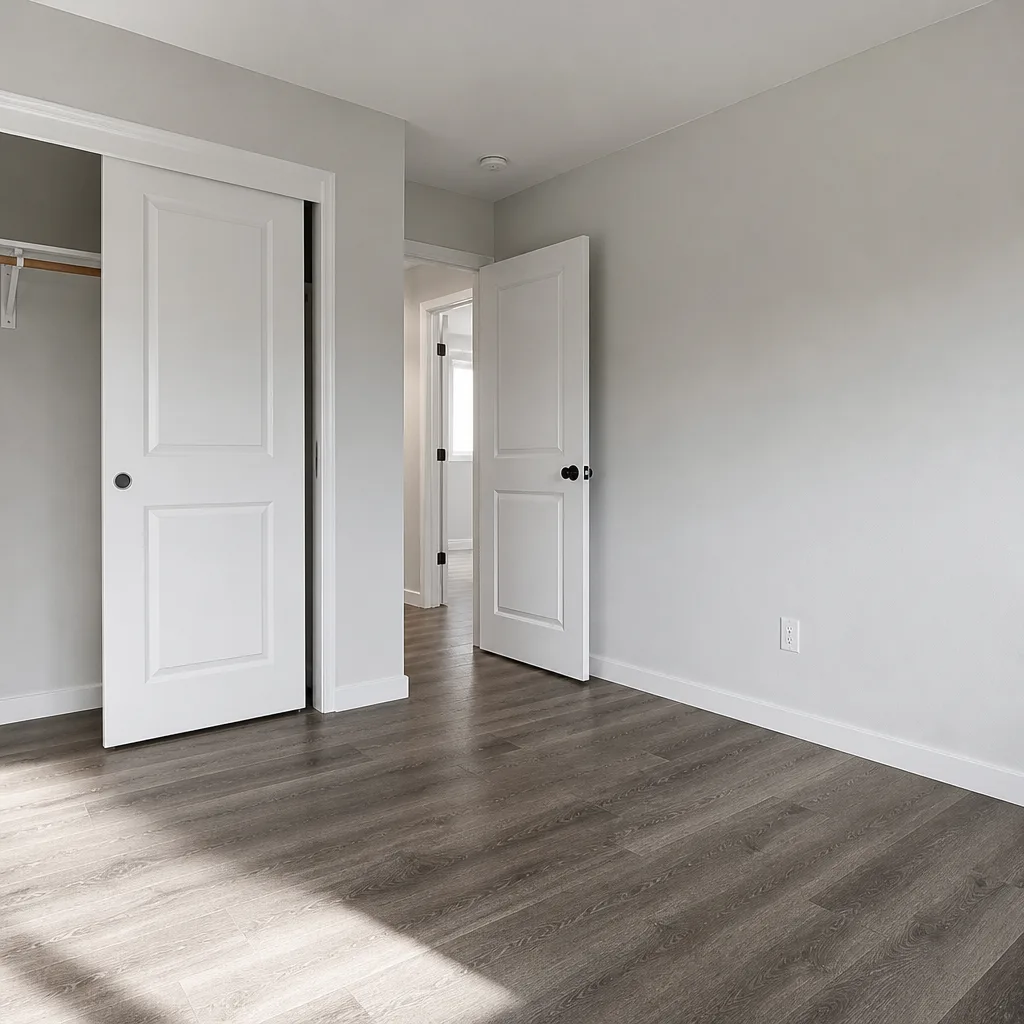 After
After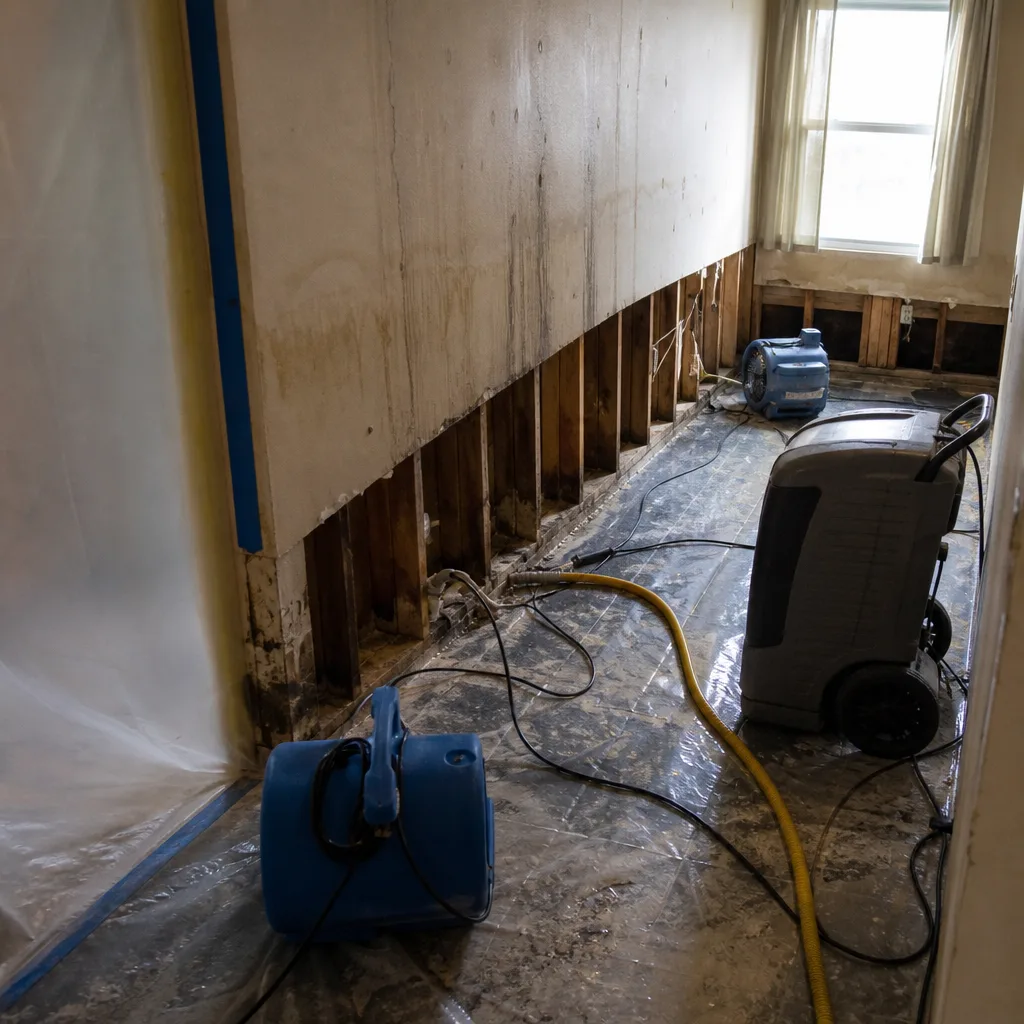 Before
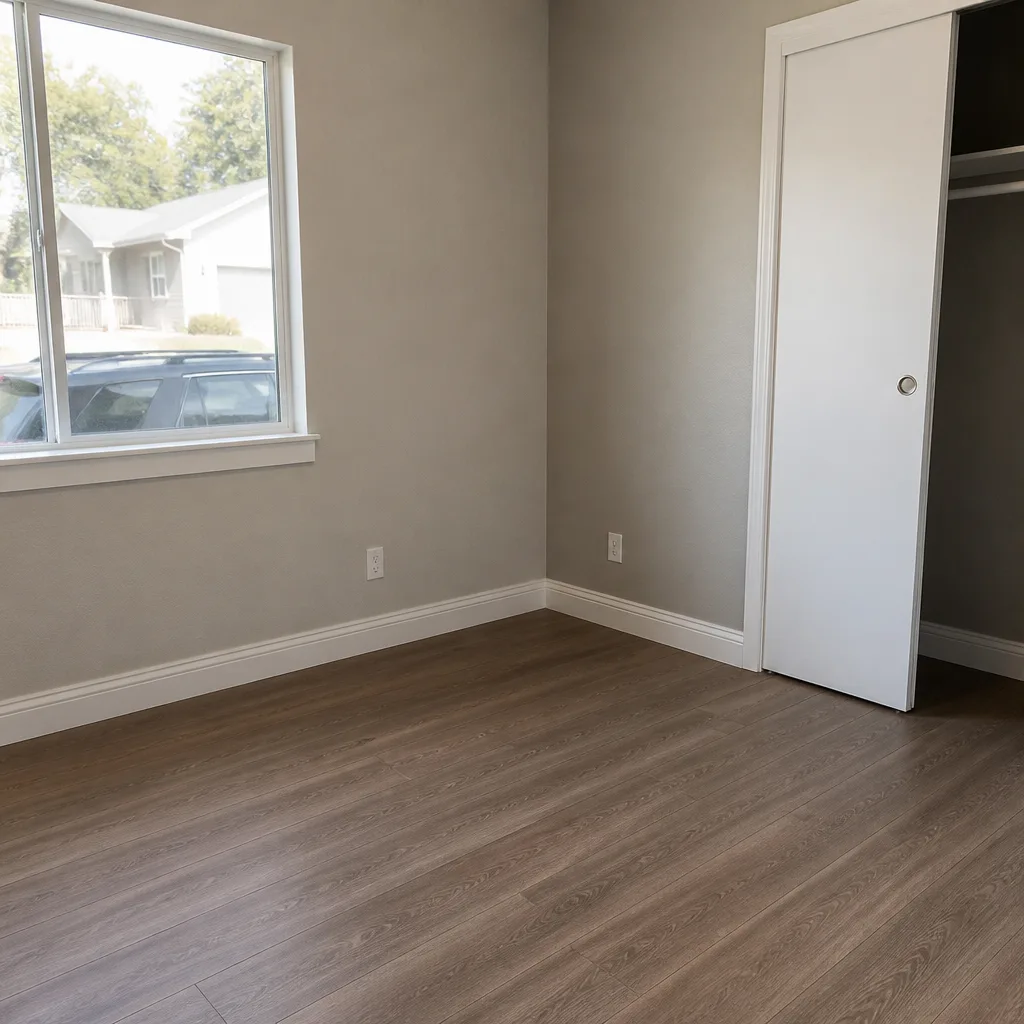 After
After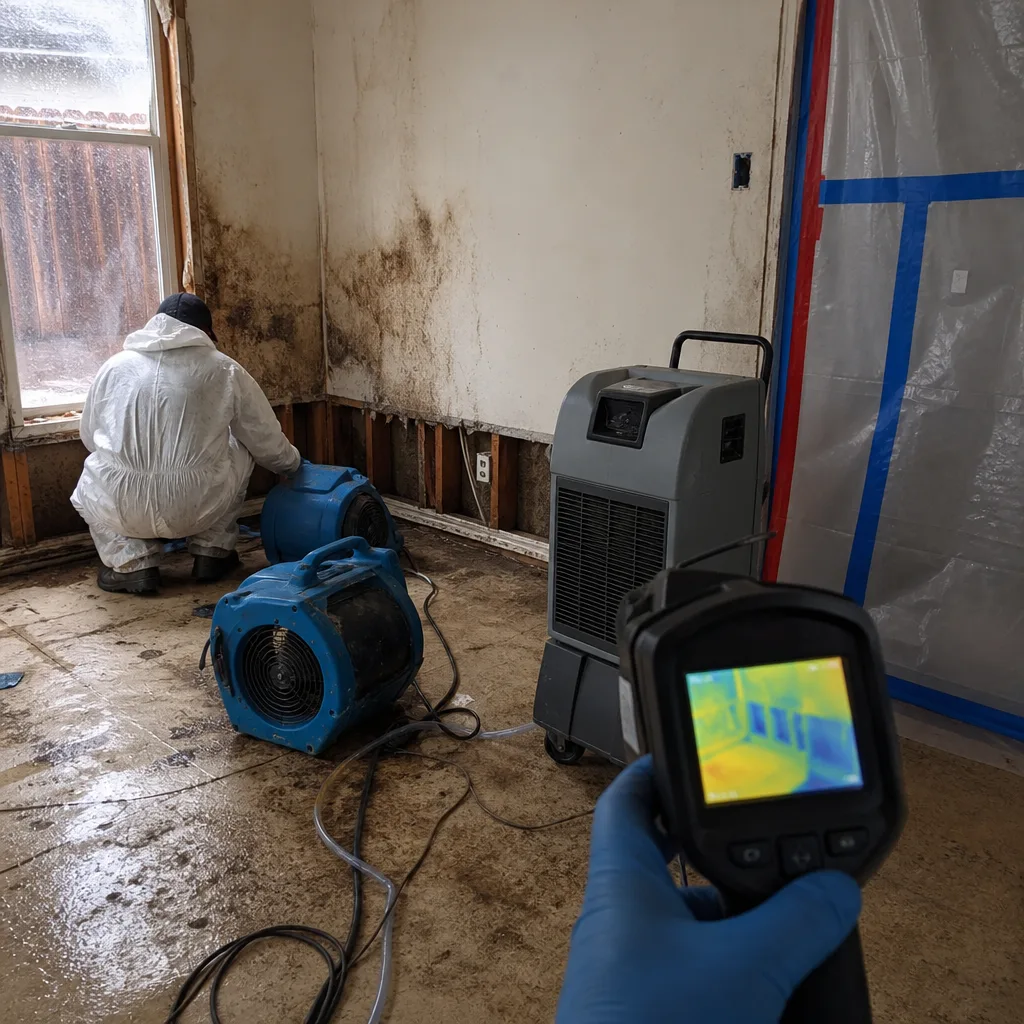 Before
 After
After